

Occult & Art Book Publications
Ambient, Ritual & Industrial Soundscapes
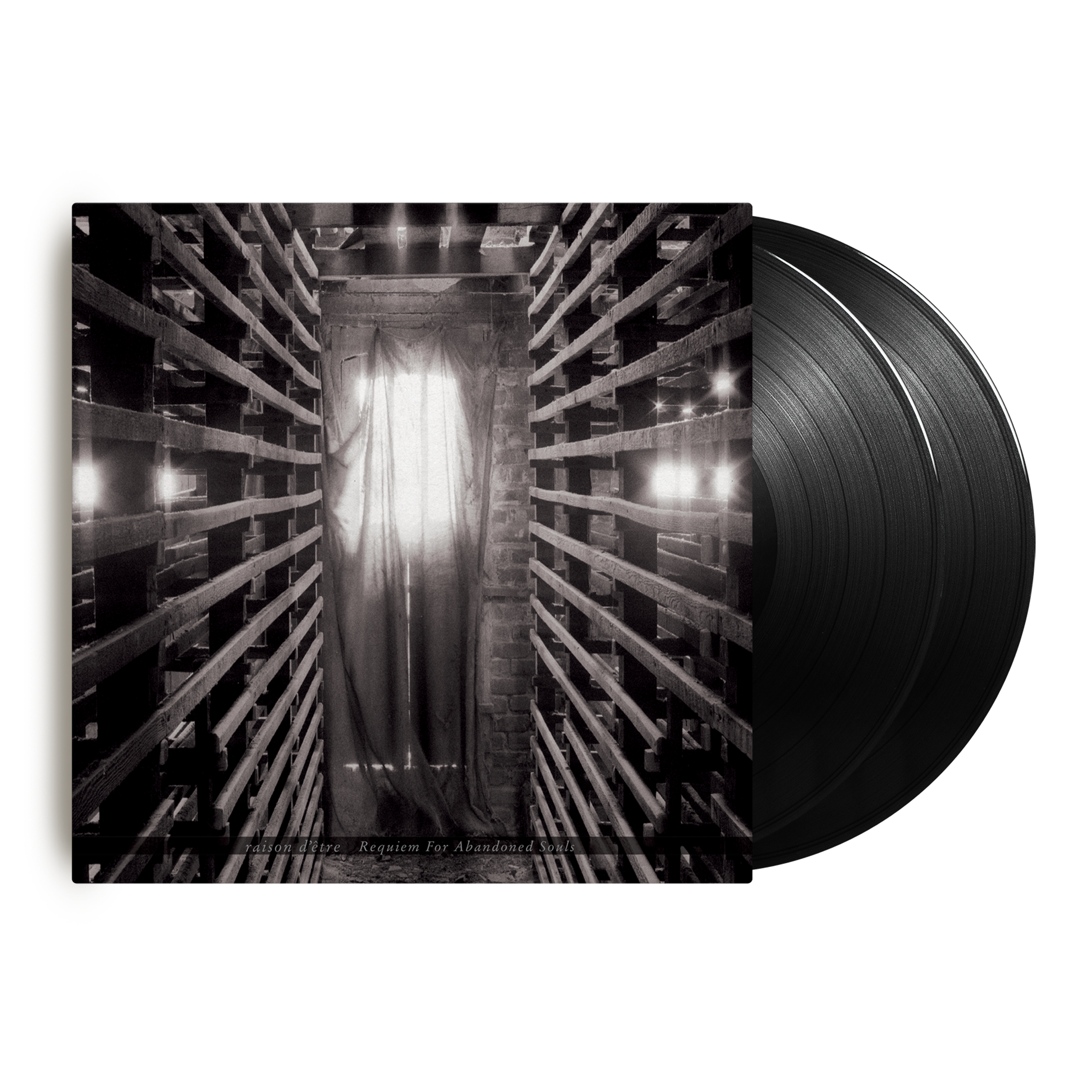

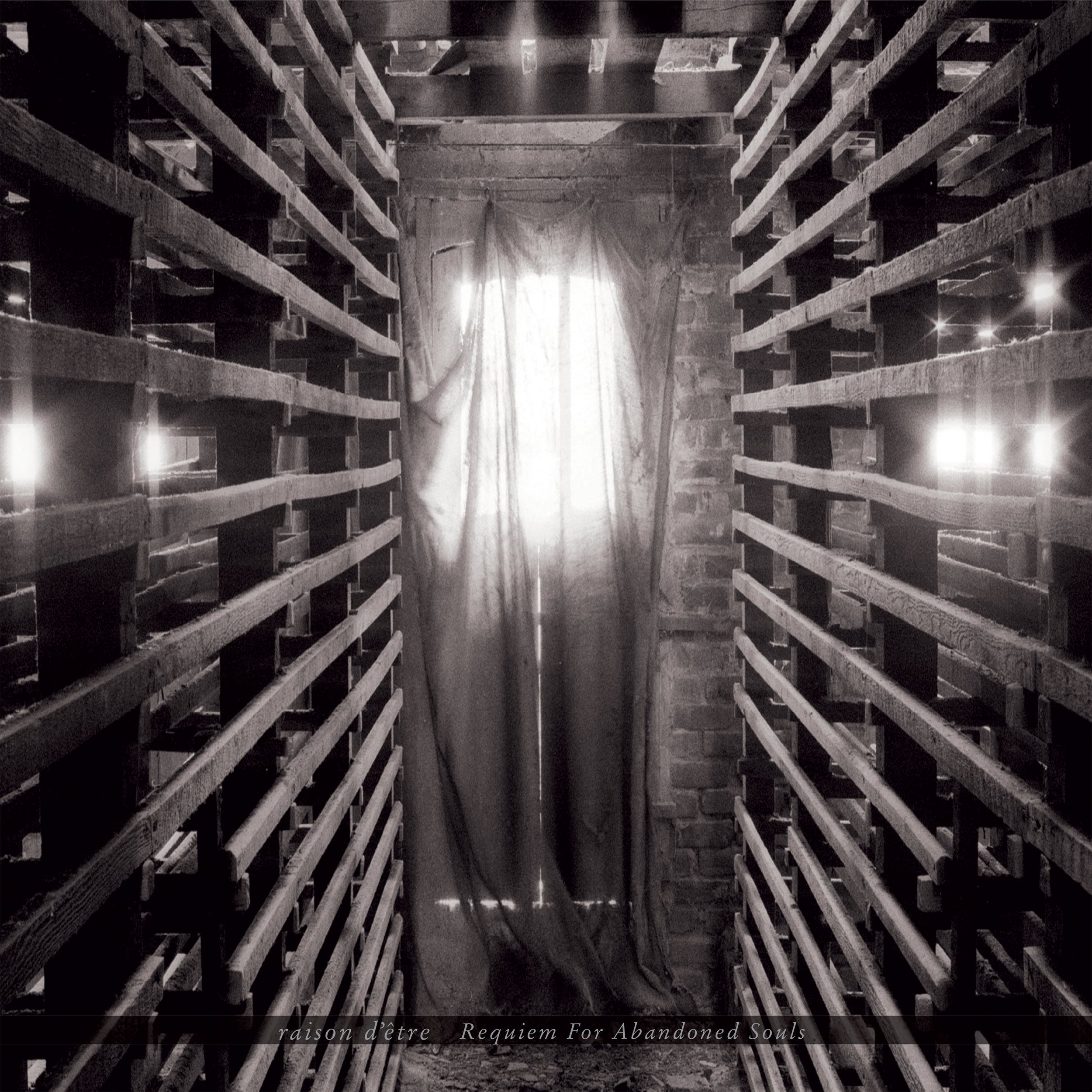
Originally released in 2003, Requiem for Abandoned Souls returns as a double-LP reissue, marking the album’s first appearance on vinyl.
Across 9 interlinked tracks, Peter Andersson’s raison d’être shapes an existential passage through desolation, faith and the possibility of inner renewal. Church bells, reverberating drones, metallic textures, discordant chimes, haunting chorals and sub-orchestral movements gather into a dark, immersive sound world.
Sacral and arcane religious undertones run throughout the album. Its track titles can be read individually or together as a poem, tracing a bleak landscape populated by souls abandoned of hope. Yet within the atmosphere of decay and loss, Requiem for Abandoned Souls reveals a striking beauty, a meditation on finding stillness and meaning amid chaos.
This expanded edition pairs the original album with 4 bonus tracks.
Artwork Photography by Henk van Rensbergen.
Standard edition of 200 copies in matt laminated Gatefold Sleeve, on black vinyl. 9 tracks. Running time 74:09
Special edition of 100 copies in matt laminated Gatefold Sleeve, on cloudy (crystal clear/silver) vinyl. 9 tracks. Running time 74:09
EAN: 3770033798720
Tracklist:
A01 in Abandoned Places 9:12
A02 The Shadow Of The Soul 7:47
B01 Disintegrates From Within 9:58
B02 Towards Desolation 9:00
C01 Becoming The Void Of Nothingness 14:13
C02 Summoning The Void 3:56
D01 Mouldering The Forlorn I 8:02
D02 Mourn Him Yet 4:54
D03 Mouldering The Forlorn II 6:42
Release Date December 18 2026
Digital Available via Bandcamp
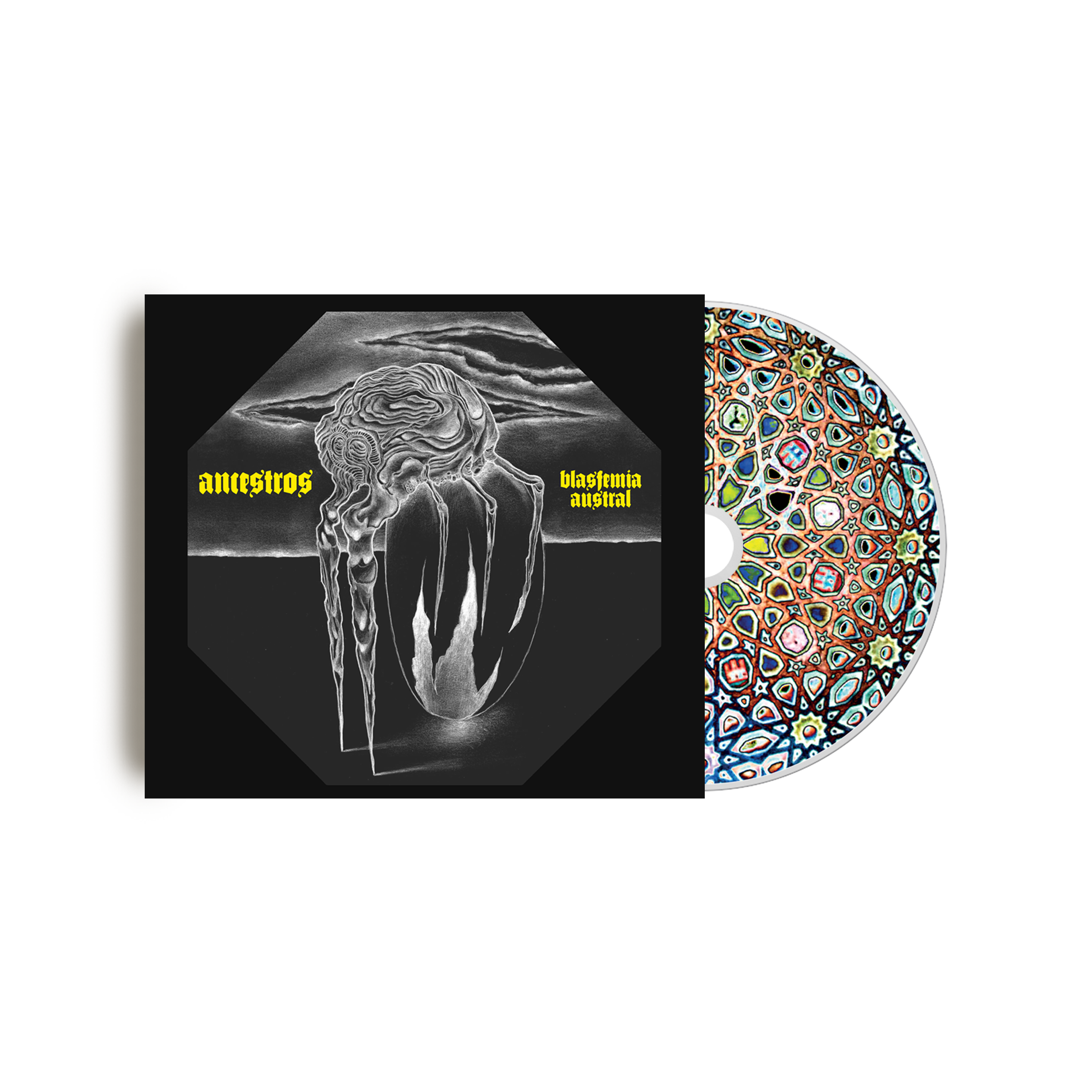
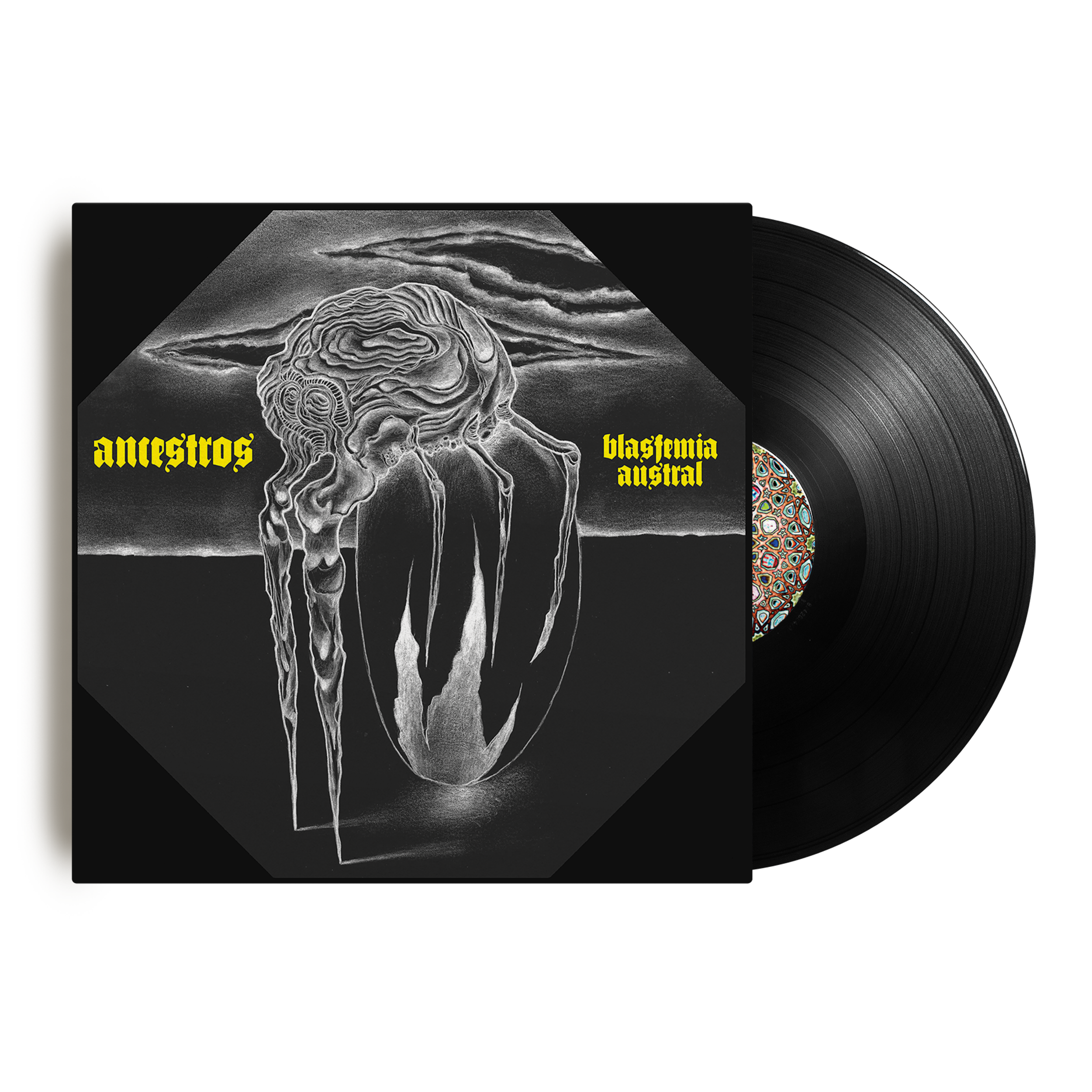
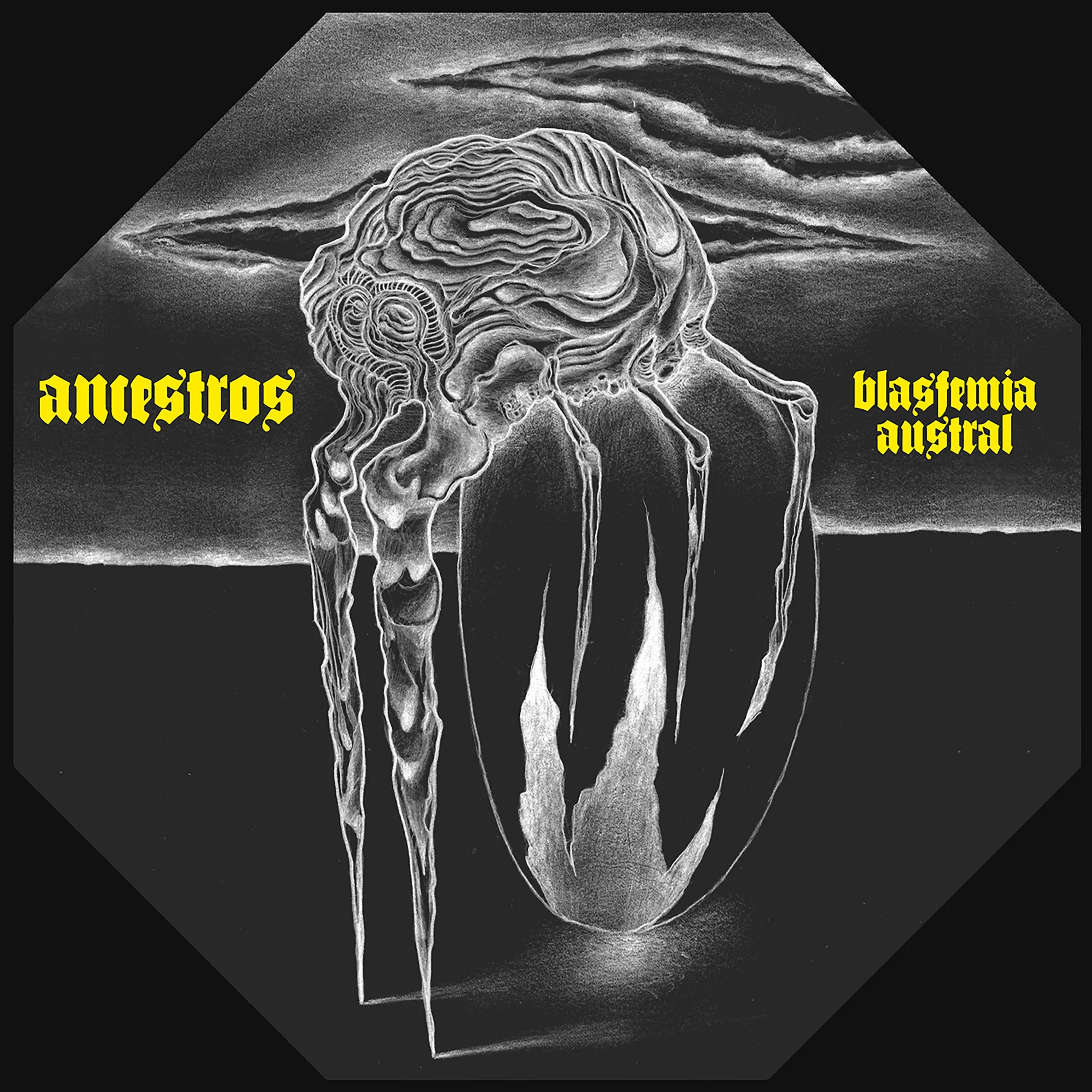
Ancestros is a new extreme-metal entity featuring members of Orthodox, Voidescent, PYLAR, and more. Drawing on the primal force of the genre’s earliest innovators, when its possibilities were still undiscovered, the collective reaches into metal’s deep past to recover and transform its vital essence.
Through speculative, experimental techniques, hyper-riffs, rhizomatic structures, deterritorialization, and hyper-texture, Ancestros radically reconfigures contemporary extreme metal. Their sound is a volatile convergence of ideas, resonating with the boundary pushing legacies of Teitanblood, Deathspell Omega, Oranssi Pazuzu, and Reverorum ib Malacht.
At its core, Ancestros distils the raw, elemental spirit of Hellhammer and Bathory, then drives it toward the outer limits of the genre through avant-garde composition and disorienting sonic architecture.
Ancestros is also a total aesthetic vision. Its concept of the “austral” takes shape as a myth of geological horror: the desert as non-place, a vector toward an alien elsewhere. Across sound, image, and text, austral strata are imposed upon reality, setting in motion an irrational, hallucinatory process of deterritorialization and forging a singular, atavistic imaginary.
Lyrically, the project draws on Speculative Realism, Lovecraftian horror, and hyperstition to build an inexhaustible, self-generating mythology. Texts by avant-garde writers and philosophers including Germán Sierra and Ramiro Sanchiz expand this world beyond the limits of the record itself.
Ancestros is a multiform, chaotic collective of musicians, writers, and visual artists committed to pushing extreme metal beyond its own borders. Their debut full-length, Blasfemia Austral, is more than an album: it is a sonic map, a blueprint for descending into metal’s buried origins and retrieving the forgotten relics that helped forge the genre.
CD Edition of 300 copies in 6 panel Digisleeve. 6 Tracks. Running Time 48:11 EAN: 3770033798690
Vinyl Edition of 250 copies in 3mm sleeve, printed inner sleeve, matte varnish. 6 Tracks. Running Time 48:11 EAN: 3770033798683
Release Date November 16 2026
Digital Available Via Bandcamp
PRE-ORDERS
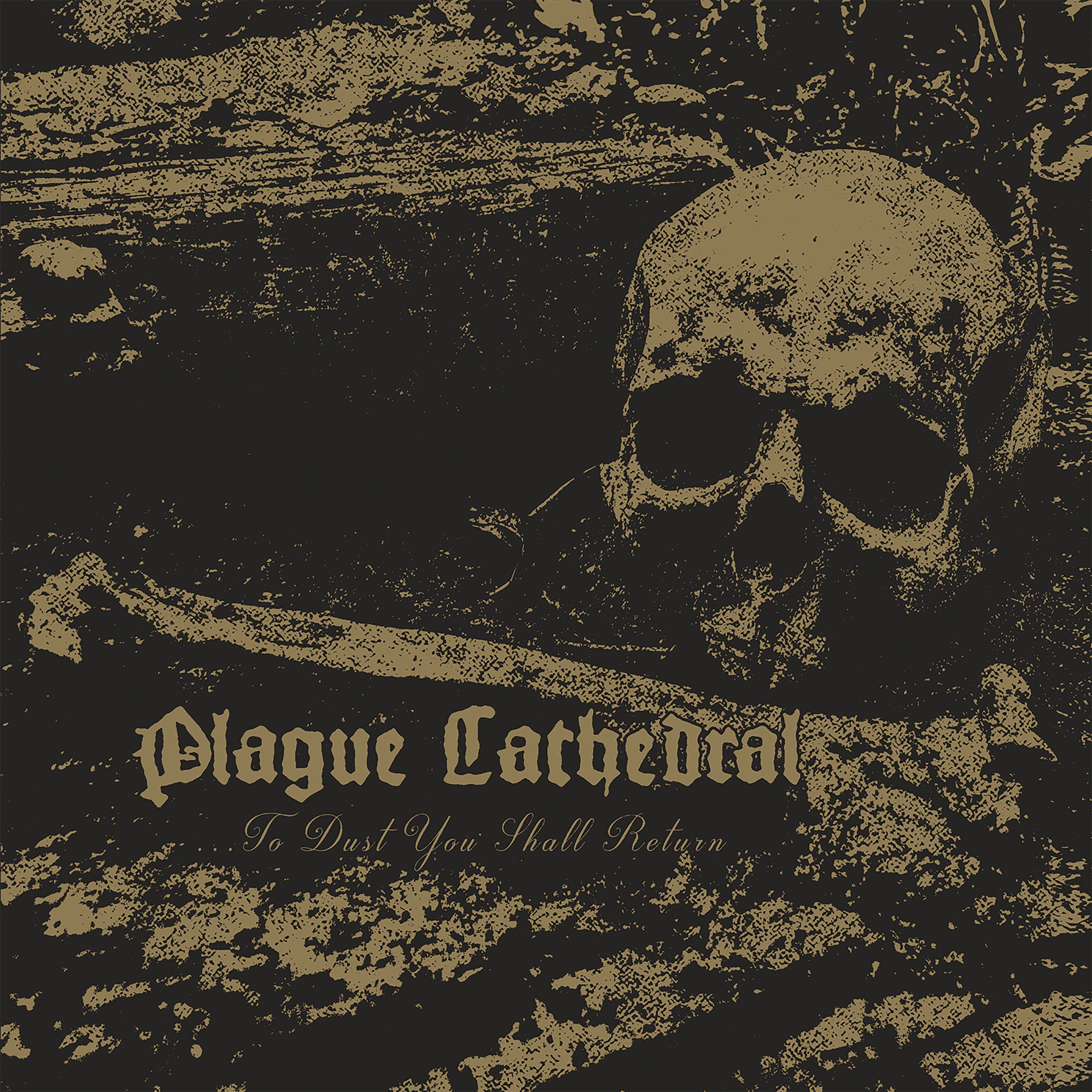
Canadian duo Plague Cathedral, featuring members of Undirheimar / Sublimatio Mortis & NordicWinter, summon a new black plague with their debut album, ...to dust you shall return, an ominous meditation on the collapse of modern, decadent society. Beneath Death’s cold, grey veil, a world in decay approaches its inevitable end.
Forged from industrial experimentation and crushing doom metal, the album builds an oppressive, apocalyptic soundscape into a force of its own. Drawing on medieval tragedy and the foreboding shadow of pestilence, Plague Cathedral give voice to a dark, brooding vision: a soundtrack for the end times.
Each track leaves its mark like a grim epitaph, confronting the listener with a stark truth: all things must come to an end. There is no escaping the judgement.
The resonance is deafening. The meaning is absolute. The judgement is final.
...to dust you shall return is co-produced with Zazen Sounds.
CD Edition of 300 copies in 4 panel DVD Digipak with 8 page Booklet. 7 Tracks. Running Time 43:28 EAN: 3770033798706
Release Date October 26 2026
Digital Available Via Bandcamp
Bay Area based experimental metal entities Sutekh Hexen and Seattle’s Hissing unveil SH:HS, a long-awaited collaborative release capturing the raw intensity of their joint improvisational project, SH:HS (Sutekh Hissing Arkestra).
Originally conceived as a live convergence of both bands’ full lineups, SH:HS documents two volatile and distinct performances recorded in 2017 and 2019. These recordings, born from spontaneous interaction and unrestrained sonic exploration, have since undergone an extensive transformation. Across 2024–2025, both groups meticulously revisited the material, cleaning, mixing, and reshaping the source recordings with a careful balance of restraint and intervention, preserving the immediacy of the performances while expanding their depth and dimensionality.
The result is a work that embodies abstract metal improvisation at its most feral and unfiltered. SH:HS channels dissonant textures, unstable rhythmic forms, and raw sonic collisions unfolding in real time. What emerges is a dense and unpredictable soundscape, oscillating between chaos and intention, where structure feels simultaneously eroded and reconstituted in the moment.
This release stands as both a document and a reconstruction, capturing not only the ephemeral nature of live improvisation, but also the evolving dialogue between two of of the west coast’s most uncompromising experimental acts.
CD co-released with Phage Tapes.
Edition of 300 copies in 6 panel Digisleeve. 2 Tracks. Running Time 29:45 EAN: 3770033798645
Release Date June 11 2026
Digital Available Via Bandcamp
Castle Burner, the second full length from Berlin’s mysterious Üngtt project, creates a suffocating world of deteriorating sound textures that are both beautiful and brutal in their unfolding. Friends of Cyclic Law will know the name B.S.s. as the spirit behind such projects as Common Eider King Eider, Curse All Kings and long time collaborator of Sutekh Hexen and Six Organs of Admittance. With Castle Burner, the shadows lengthen, the soil cools, and the smell of decomposition fills the air.
Lying somewhere within the intersection of black ambience, dungeon synth and black metal, Castle Burner holds the listener hostage within a prison of oppressive haze. Melancholic memories haunt and torment while shadows of intention expand and contract. Yet despite this heaviness, there is a beauty found here that holds and protects. This is not an exercise in misanthropic posturing, but a methodical study of animistic nature expressed within death, decay and rebirth.
All hail the Circle of the Rotting Forest Floor as it ushers forth new life!
Includes 4 Bonus tracks of long out of print Cdr release "Peasant Revolt".
Co-Released with Breath.Sun.Bone.Blood
CD Edition of 200 copies. Packaged in a triple gatefold A5 chap book, offset printing. 16 pages of animistic meditations. Housed in black uncoated 300 gram slip case. Screen printed. All elements hand fabricated by B.S.s. 8 Tracks. Running time: 73:00
Release Date October 2 2026
Digital Available Via Bandcamp
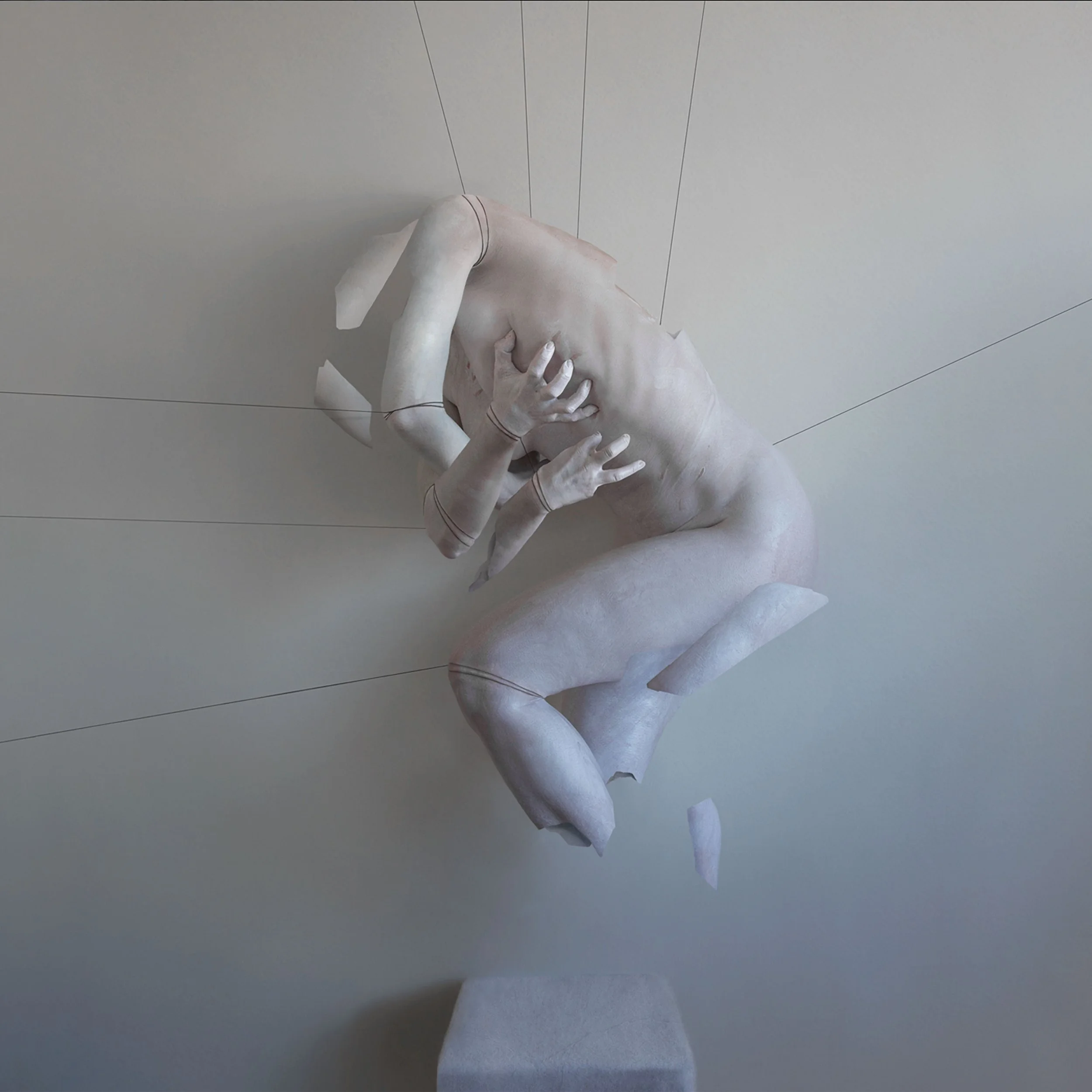
“Ypnos”, the Greek word for sleep, is reinterpreted here as something far more introspective and unsettling. Within the context of this release, it evokes a state of emotional isolation and spiritual withdrawal, a descent shaped by trauma. Rather than presenting trauma in a literal or narrative form, Fractalyst translates it into a kind of aural poetry, abstract yet deeply resonant.
The album avoids fixation or glorification of suffering. Instead, it unfolds as a gradual immersion, guiding the listener through internal landscapes marked by tension, fragility, and quiet endurance. Beneath its weight lies a persistent undercurrent, the search for light within darkness, the impulse toward release, renewal, and transformation. Each composition acts as a fragment of this journey, forming a cohesive passage from dissolution toward the possibility of rebirth.
Fractalyst was formed in Athens in 2019 by Dimitris Valasopoulos, with a clear intent to explore analog-driven ambient sound rooted both in past traditions and contemporary sensibilities. Unbound by genre constraints, the project embraces fluidity in structure and process, allowing sound to emerge freely, guided by intuition rather than convention. The result is an approach centered on total artistic freedom, where composition becomes an act of liberation.
Following several self-released works, Fractalyst made its official debut on Cryo Chamber with the album Watchtower, establishing a distinct sonic identity within the modern ambient landscape. This trajectory continued with a collaboration alongside Cities Last Broadcast, culminating in the spectral work Phantasmora.
With Ypnos, Fractalyst enters a new phase, one that is more introspective, more stripped, and more emotionally exposed. It stands as both a personal document and an open invitation, to confront inner voids, and to move, however slowly, toward the light beyond them. Artwork by Nihil.
CD Edition of 200 copies in 6 panel Digisleeve. 8 Tracks. Running Time 54:40 EAN: 3770033798423
Release Date May 15 2026
Digital Available Via Bandcamp
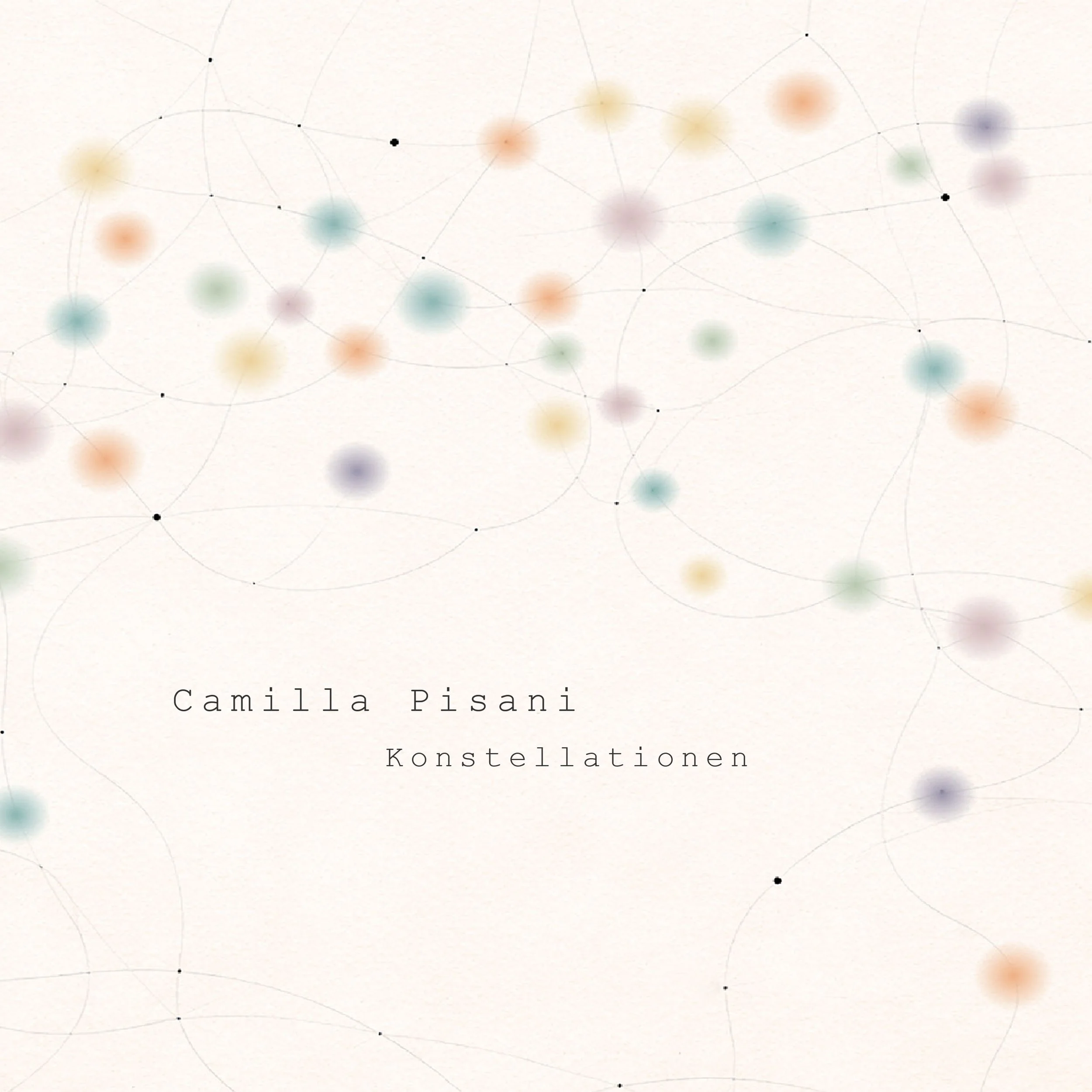
With Konstellationen, Camilla Pisani explores language as a fluid and universal force, extending beyond words into sound, gesture, symbols, and even the movements of the stars. At the heart of the work lies rhythm, the fundamental principle linking music, astronomy, and human perception, transforming disparate forms of expression into a unified creative language.
Through layered arrangements, hypnotic pulses, and suspended atmospheric textures, Pisani creates a series of immersive sonic environments where rhythm becomes more than structure, evolving into a vehicle for emotion, transformation, and connection. Delicate yet powerful, the compositions unfold as dreamlike spaces suspended between intimacy and vastness.
Expanding beyond the purely musical, Konstellationen embraces a multidimensional artistic approach in which sound, text, and imagery exist in constant dialogue. Each composition is accompanied by writings developed by the artist over several years, offering poetic entry points into the work and enriching its narrative depth.
Conceived as both a personal reflection and a universal gesture, Konstellationen presents electronic music as a spiritual language, one capable of transcending cultural boundaries through shared sonic experience. Cyclical rhythms echo celestial movements, natural forces, and collective human experience, inviting listeners into a world where perception, imagination, and communication converge.
CD Edition of 200 copies in 4 panel Digipak with 16 pages Booklet. 6 Tracks. Running Time 59:24 EAN: 3770033798676
Release Date July 3 2026
Digital Available Via Bandcamp
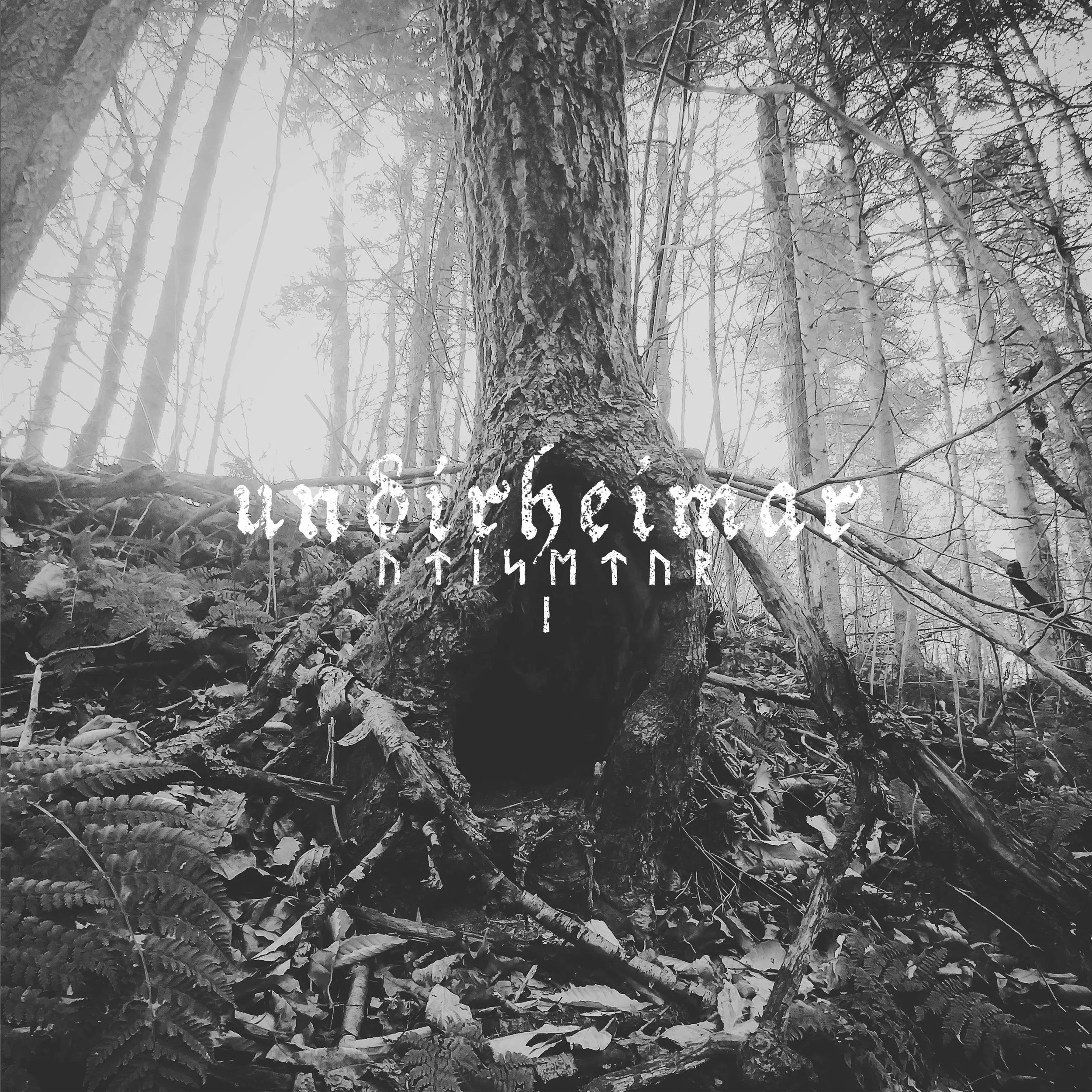
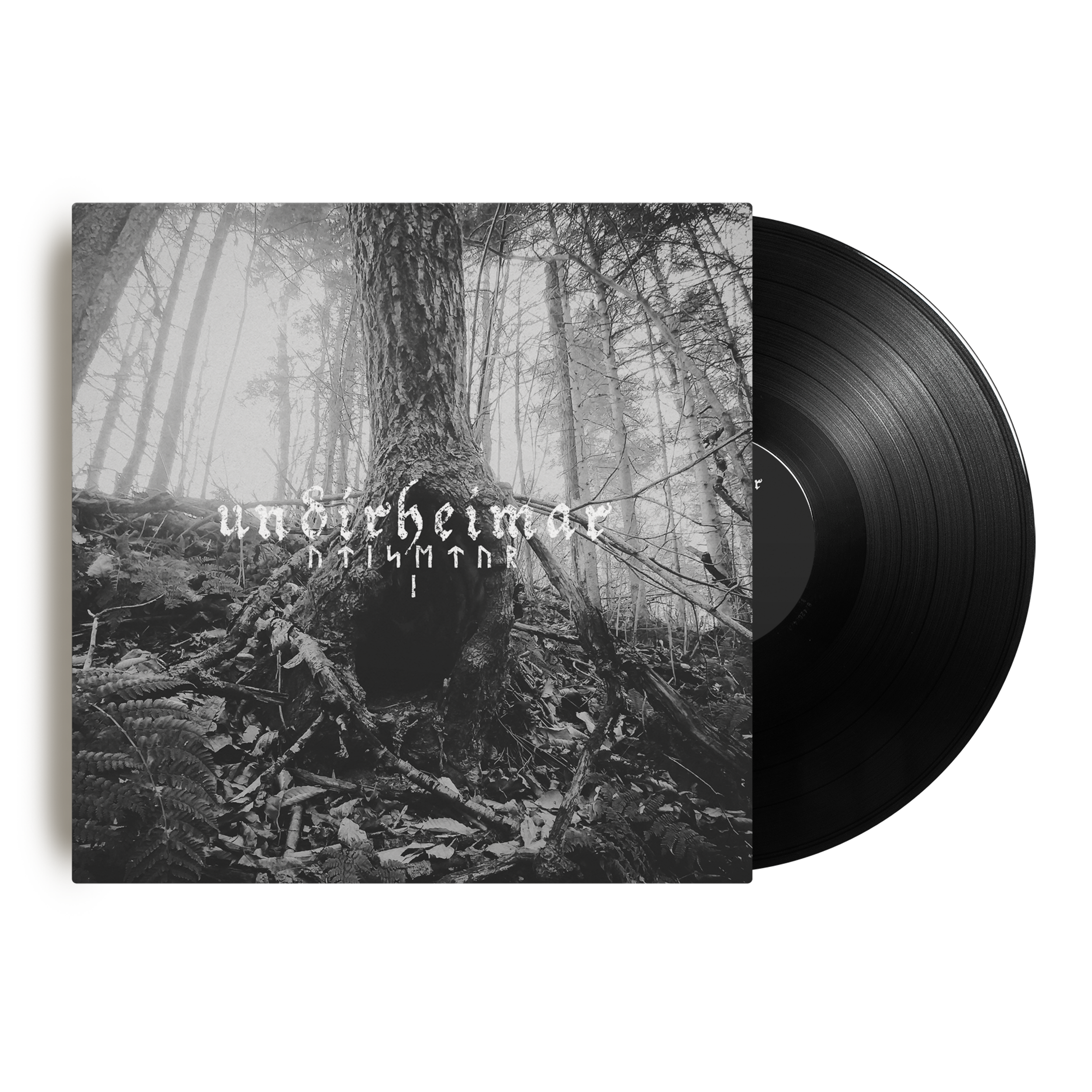
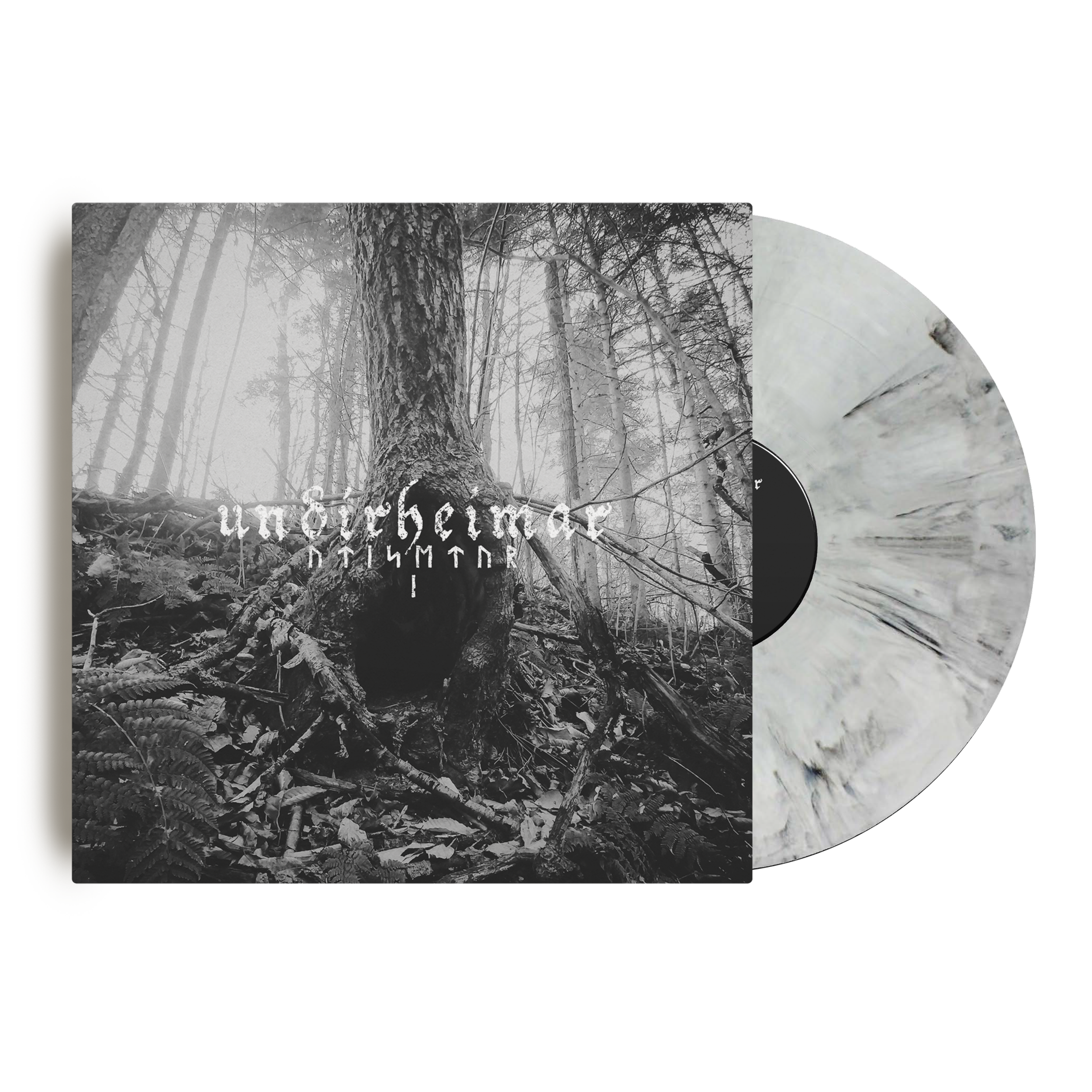
Undirheimar Returns with Utisetur I, A Pure Vocal Descent into Ritual Trance
Utisetur I is the sixth album by Canadian ritual project Undirheimar. Marking the beginning of an ambitious trilogy, this new work delves deeper than ever into the project’s uncompromising spiritual and sonic vision.
Utisetur I unfolds as a six-part ritual chant rooted in the ancient meditative practice of Utiseta. Stripping away all instrumentation, Undirheimar constructs the entire album exclusively from layered overtone singing, creating a dense, immersive field of resonance without the use of synths, drones, or external sound sources. The result is a stark yet richly textured sonic environment, where voice alone becomes both medium and conduit.
Through this singular approach, the album channels a deep trance state, guiding the listener inward through primal, Thursian currents that pulse across inner and outer worlds alike. Each movement operates as a phase of transformation, a sonic rite of transmogrification unfolding in real time.
With Utisetur I, Undirheimar initiates a trilogy that promises to further explore the boundaries between sound, ritual, and altered states of consciousness. This first chapter stands as both an invocation and an invitation: to listen, to descend, and to experience the unseen through vibration alone.
Close your eyes, breathe deeply, and enter the current.
CD Co-Released with Zazen Sounds.
CD Edition of 200 copies in A5 Digisleeve. 6 Tracks. Running Time 43:07 EAN: 3770033798607
Vinyl Edition of 200 copies, 100 on Marbled Black & Grey and 100 on Black vinyl. In 3mm Sleeve with Printed Innersleeve.6 Tracks. Running Time 43:07 EAN: 3770033798591
Release Date May 15 2026
Digital Available Via Bandcamp
NEW RELEASES
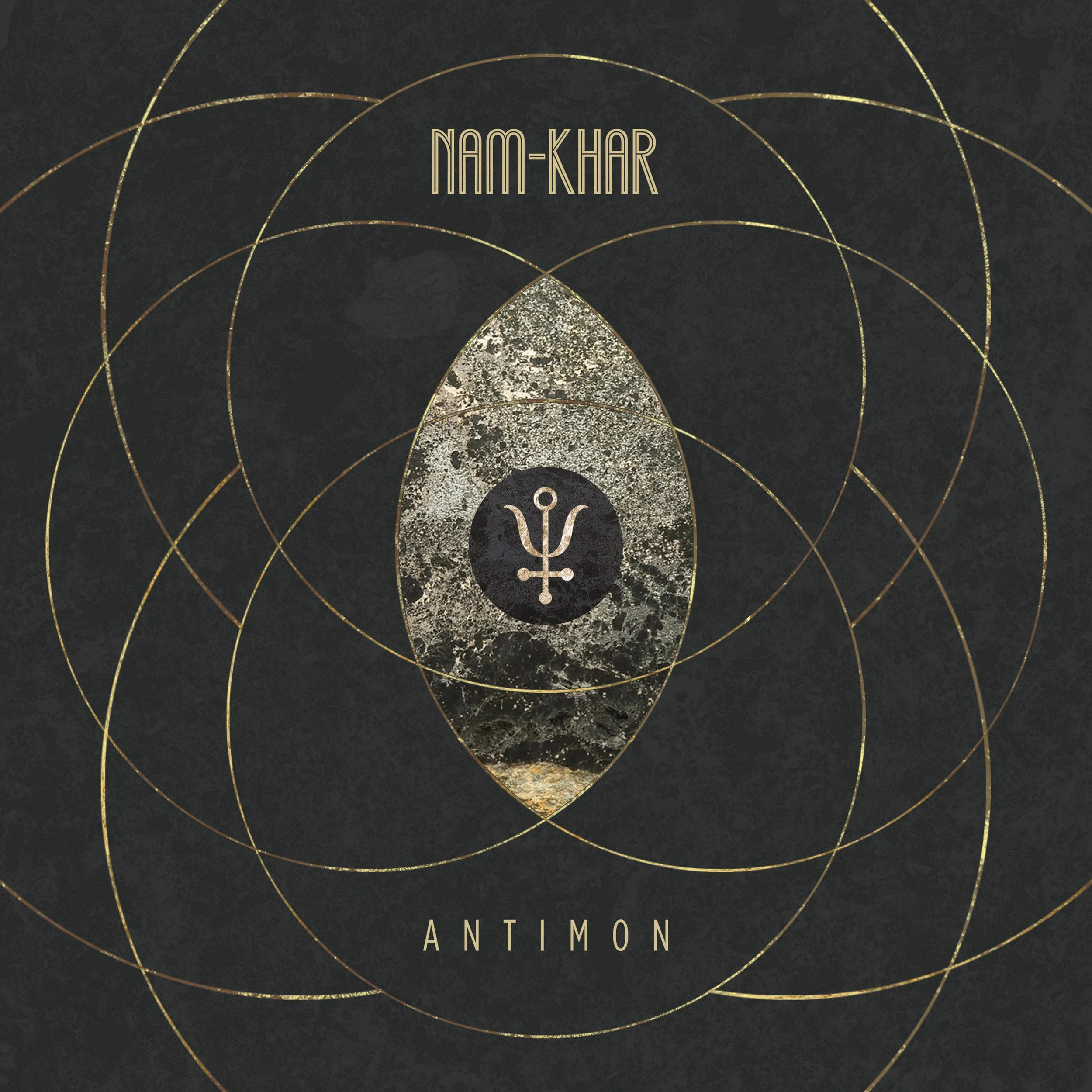
Returning after the introspective descent of The Sarajevo Spiral, Cyclic Law presents Antimon, the latest ritual transmission from the long-standing collective Nam-Khar. Founded in 2009, the project has continuously navigated the liminal intersections between ritual ambient, psychoacoustic exploration and esoteric introspection, employing an arsenal of ethnic instrumentation, analog synthesis and immersive visual elements to construct deeply transformative sonic environments.
Over the years, Nam-Khar has shared creative paths with acts such as Sielwolf, Vortex and Alone in the Hollow Garden, while bringing its ceremonial performances to festivals across Europe and Australia. Following the completion of the acclaimed “Tibetan Trilogy” (Secret Essence, Sur Chöd, Dok-Pa), Antimon signals a significant evolution in the project’s sonic language while retaining the spiritual and ritualistic essence that has defined its previous works.
Within Antimon, contemplative analog drones and ritual sound structures merge with clicks, glitches, sequenced pulses and vast floating textures, forming a sonic coniunctio where organic and synthetic elements dissolve into one another. The result is an album that feels equally meditative and psychologically charged, unfolding like an interior rite suspended between dream states and subconscious revelation.
Conceptually, the album continues Nam-Khar’s engagement with psychoanalysis and the analytical psychology of Carl Gustav Jung. While The Sarajevo Spiral examined socio-political fragmentation and collective trauma, Antimon turns inward, exploring the emergence of unconscious psychological material into conscious awareness through both Freudian and Jungian perspectives.
Drawing from Jung’s fascination with alchemical symbolism as manifestations of archetypal structures within the collective unconscious, Antimon approaches alchemy not as historical curiosity, but as a metaphorical framework for psychic transformation. The ancient transmutation of lead into gold becomes a symbol for the purification and integration of the fragmented self, mirroring the process Jung identified as individuation. Echoing Sigmund Freud’s famous statement, “Where id was, there ego shall be,” the album navigates the unstable threshold between shadow and consciousness, dissolution and reconstruction.
This philosophical foundation resonates deeply with the observations of psychotherapist Andrew Samuels, whose writings on alchemical imagery and the plural psyche describe the symbolic language of alchemy as uniquely capable of expressing the paradoxical interplay between interpersonal experience and intrapsychic transformation. In this sense, Antimon operates as an act of “sound alchemy”, a catalyst intended to accompany processes of introspection, confrontation and inner metamorphosis.
Dense yet permeable, abstract yet profoundly human, Antimon stands as one of Nam-Khar’s most immersive and conceptually ambitious works to date, a ceremonial descent into the hidden architecture of the psyche where ritual sound becomes a vehicle for transformation. CD Co-Released with Zazen Sounds
CD Edition of 300 copies in 4 panel Digipak. 7 Tracks. Running Time 48:00
Release Date July 20 2026
Digital Available Via Bandcamp

Following the acclaimed previous album "Transcend", which seamlessly traversed experimental electronics and obscure Techno-infused structures, Frederic Arbour returns with his most daring and transformative work to date.
"Leavings" marks a decisive departure from established forms. Where its predecessor gradually evolved through recognisable rhythmic frameworks and narrative progression, this new album ventures into increasingly abstract territories, dissolving conventional structures in favor of fluid movement, instinctive composition, and perpetual transformation.
Across nine expansive pieces, Arbour explores the threshold between rhythm and abstraction. Pulses emerge only to fragment. Patterns suggest direction before evaporating into vast textural environments. The result is a body of work that embraces ambiguity, inviting listeners into a space where certainty is abandoned and exploration becomes the guiding principle.
The album’s title carries multiple resonances. Leavings suggests remnants, traces, and fragments left behind after a process of transformation. It evokes both departure and residue, the echoes of former identities, structures, and creative languages that persist even as new forms emerge. Throughout the album, sounds appear as artifacts in motion, suspended between memory and reinvention.
Textures drift between shadow and illumination, density and emptiness. Moments of fragile beauty emerge from complex layers of sound, only to recede again into abstraction. A quiet tension permeates the work, the sensation of crossing invisible thresholds while navigating territories that resist fixed definition.
Neither a continuation nor a rejection of previous works, Leavings stands as a document of transition. It captures the fertile space between dissolution and creation, where familiar forms are relinquished and unforeseen possibilities begin to take shape.
With Leavings, PURGATE enters a new phase of artistic evolution, crafting an immersive and deeply evocative work that transcends genre boundaries while remaining rooted in the project’s enduring fascination with atmosphere, depth, and transformation.
A compelling journey through shifting sonic architectures, Leavings reveals Frederic Arbour at his most adventurous and uncompromising, embracing uncertainty not as an obstacle, but as a path toward discovery.
CD Edition of 200 copies in 4 panel Digipak. 9 Tracks. Running Time 41:46 EAN: 3770033798669
Release Date July 3 2026
Digital Available Via Bandcamp
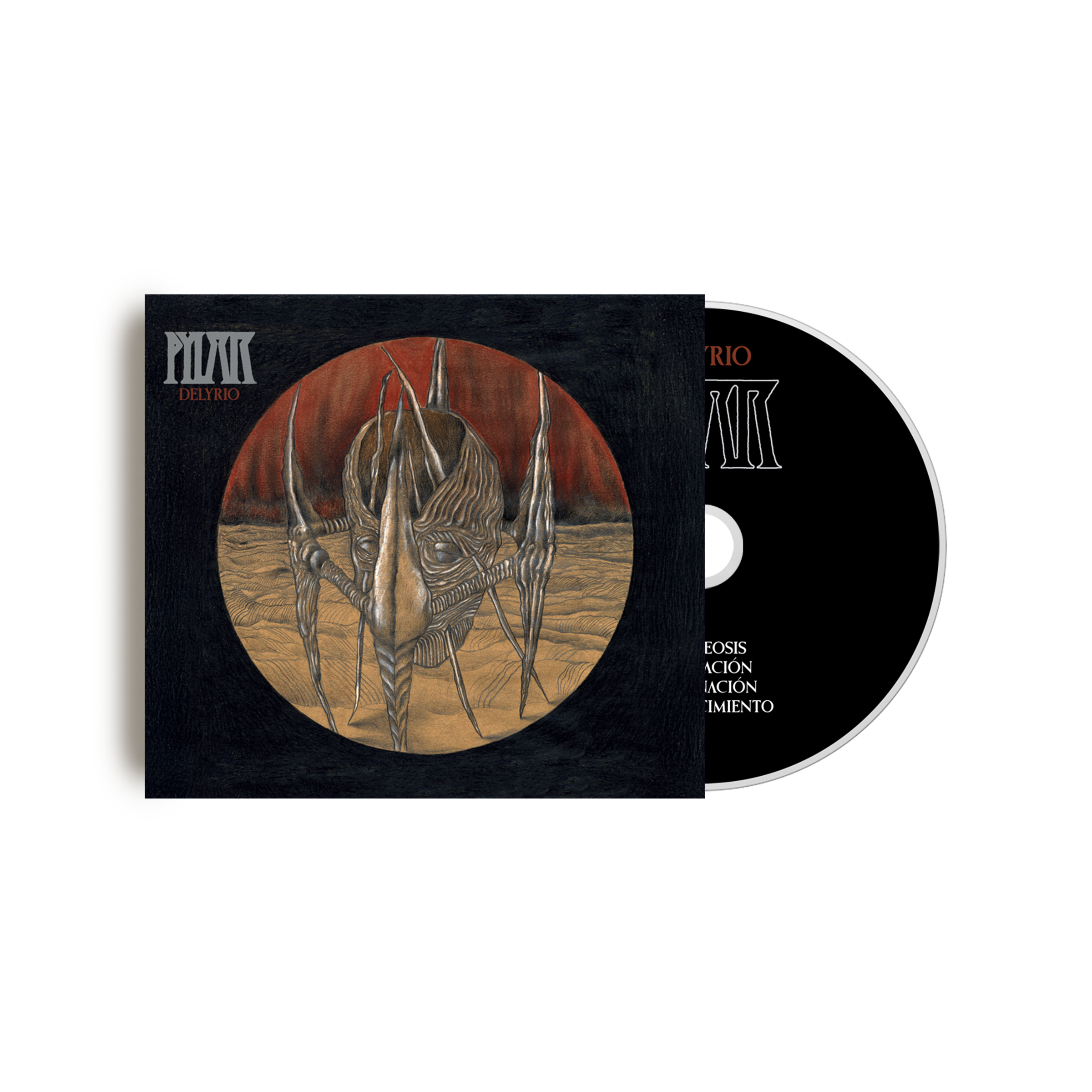
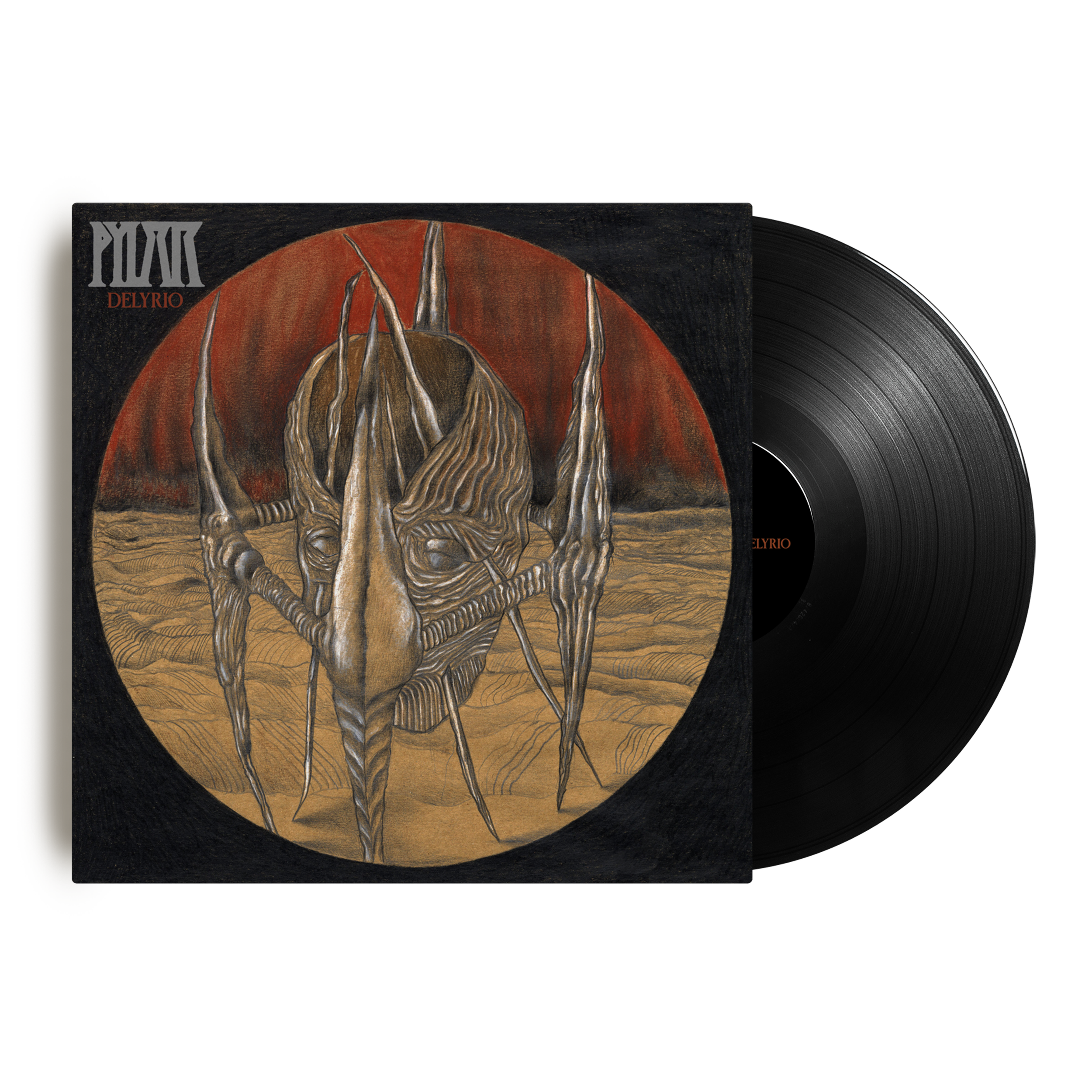
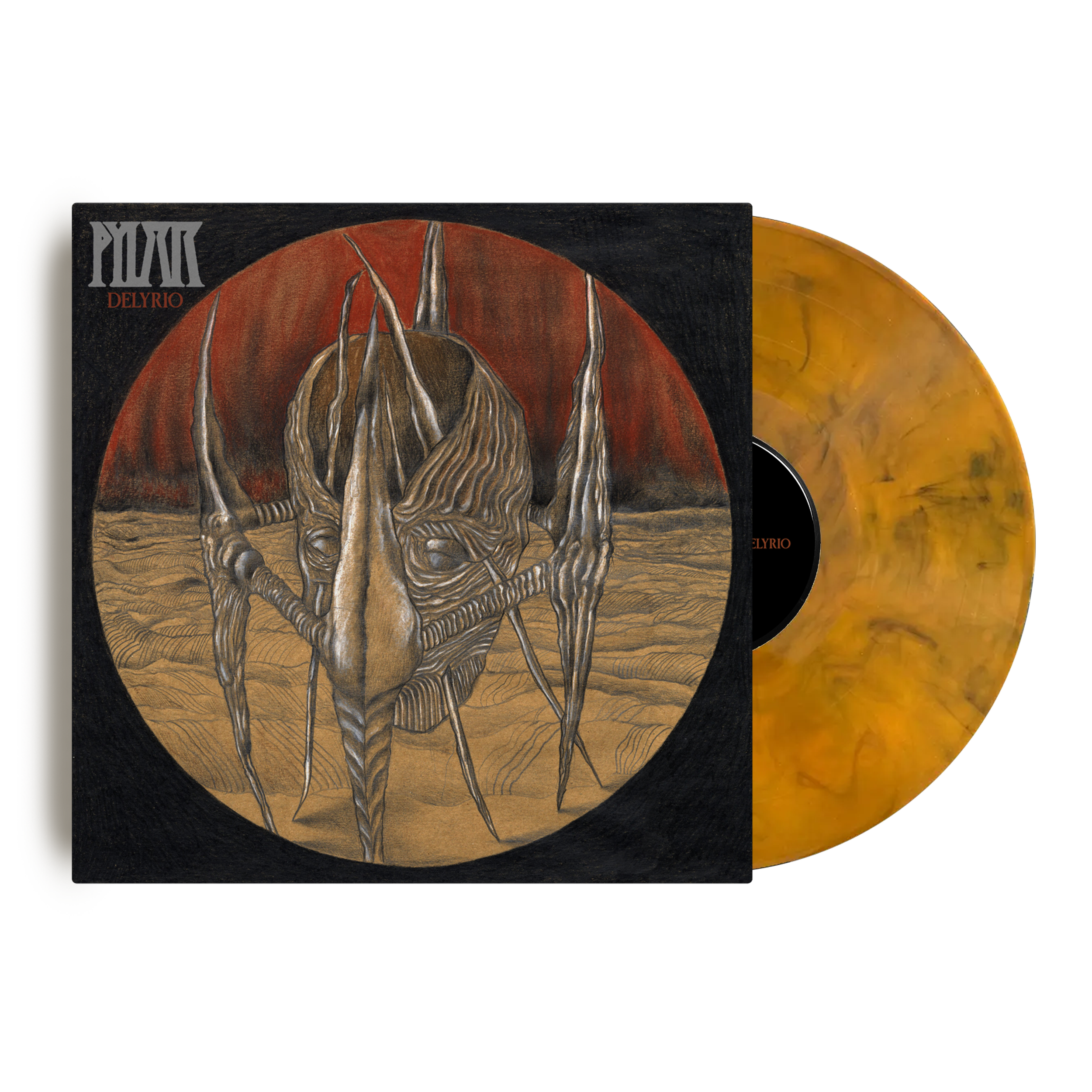
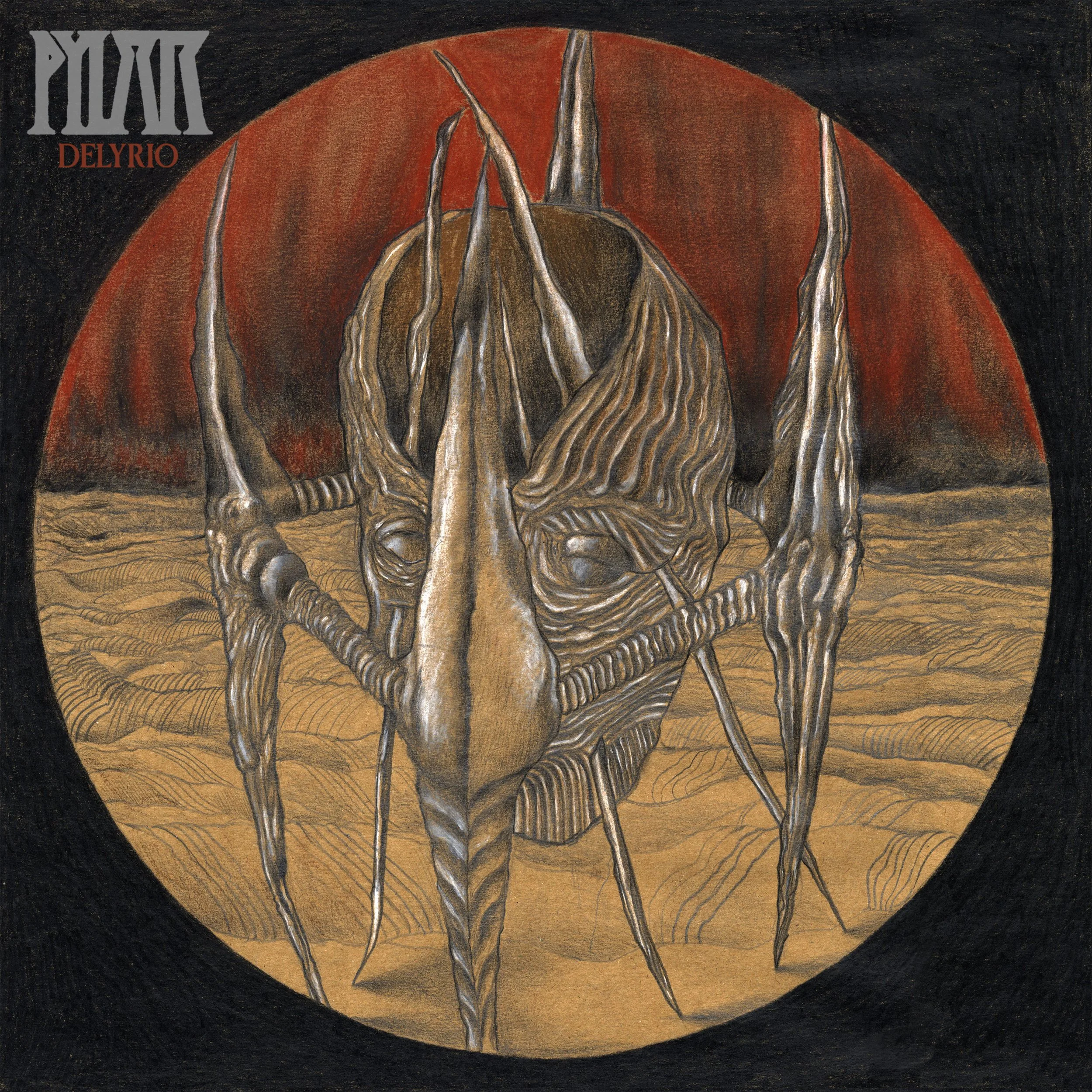
With Delyrio, Spanish speculative metal entity PYLAR returns to further expand its singular body of chrono-irrational sonic artefacts. Conceived as the opening movement of the band’s final album cycle, Delyrio pushes deeper into a fractured realm where metaphysical inquiry, delirium, and sonic extremity converge.
Having previously descended into vast territories of cosmic horror and existential collapse, PYLAR now abandons all remaining certainties in favor of pure delirious propulsion. The result is a work driven by dislocation and irrational intensity, where time, identity, and structure dissolve into a constantly shifting hallucination.
Operating as speculative agents and symbolic detonators, the members of PYLAR manipulate and deform the primordial language of metal through what they describe as the “Law of Salazar”, a mechanism of radical perspectival displacement. Their vision further absorbs conceptual fragments drawn from philosophical fiction, speculative realism, and the experimental thought of figures such as Reza Negarestani, Amy Ireland, and the chaotic theoretical currents of Cybernetic Culture Research Unit.
Across the album, Delyrio unfolds as a dark rhizomatic structure, weaving together fragments of extreme music traditions into a dense and hallucinatory sonic architecture. Layers of sound collide and mutate continuously, creating an unstable and extravagant continuum where ritualistic weight, psychedelic dissolution, and industrial unease coexist.
Echoes of Swans, Oranssi Pazuzu, and Teitanblood may surface momentarily throughout the album, yet PYLAR reshapes these spectral influences into something entirely its own: a vortex of speculative metal alchemy operating beyond convention and genre boundaries.
With Delyrio, PYLAR delivers one of its most uncompromising and conceptually immersive works to date, an album where delirium itself becomes both method and destination.
CD Edition of 200 copies in 6 panel Digisleeve. 4 Tracks. Running Time 38:39 EAN: 3770033798638
LP Edition of 200 copies, 100 on Marbled Red & Orange, 100 on Black in 3mm Sleeve with Printed Innrsleeve. 4 Tracks. Running Time 38:39 EAN: 3770033798621
Release Date July 10 2026
Digital Available Via Bandcamp

RECENT MERCH

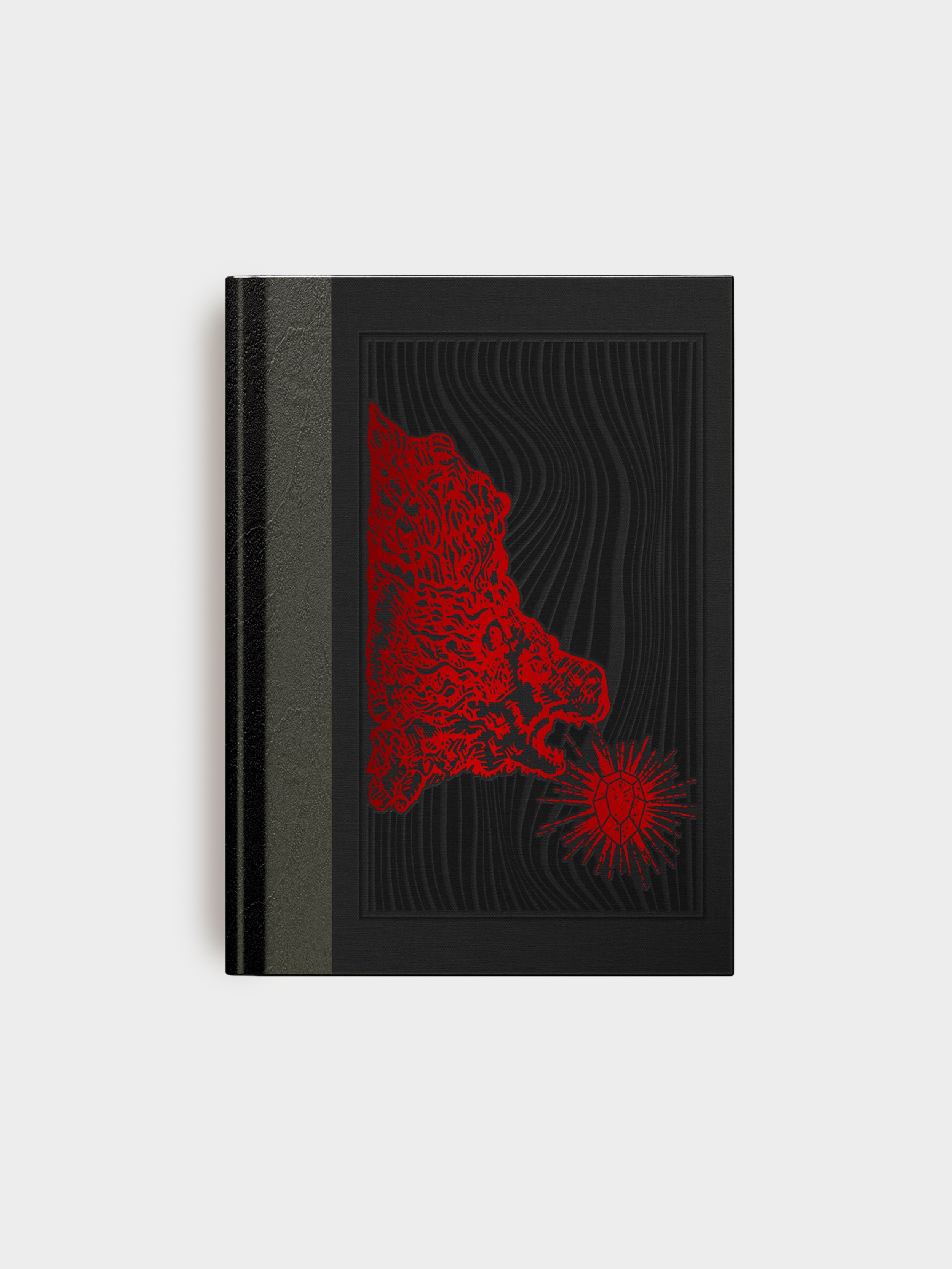
A Ruby Bright as Fire: William Blake and the Esoteric Tradition by P.T. Mistlberger
URIZEN (dark) Edition
• Hardcover Book, 400 Full-colour pages
• Tipped-in card, numbered across the entire print run (including the “LOS” Edition), signed by the author.
• Smyth-sewn binding
• Dimensions: 6.5 x 9.5 inches (15.25 X 22.9 cm)
• Greyboards 1890 gsm/3000 mic
• Process printed on Munken Smooth Cream 120 gsm archive-quality paper
• 3/4 bound in front-cover in “Assuan” Black Italian book-cloth
• 1/4 bound in front-cover and full back-cover in Corvon Metal-X “Rugged” (Tungsten Colour)
• Metallic Red foil blocking on cover and spine, plus blind deboss details on front-cover & back-cover
• “Laguna Sabbia” 180 gsm parchment-finish Endpapers
• Black & Red Headbands
• Fine typography and layout
Limited to approx. 850 copies. | ISBN: 978-1-989339-34-3
Illustrations by Caroline Chernega
Featuring numerous originals by William Blake
Thence feathered with soft crimson of the ruby bright as fire Spreading into the azure wings which like a canopy Bends over thy immortal head in which Eternity dwells. —William Blake (Jerusalem 86:7-10).
William Blake lived in relative obscurity for the duration of his life, despite producing an extraordinary body of writings and visual art. For those with eyes to see his psychological acumen and spiritual depth are clear, but for many others, including the public of his time, he seemed to wander in the lands of madness.
It was not until many decades after his death in 1827 that Blake began to slowly gain appreciation for his immense and profound creative output. The poet and Golden Dawn-trained ceremonial magician W.B. Yeats, who once claimed that Blake was his master, helped rescue the English mystic from obscurity when he published, along with his friend Edwin Ellis, the totality of Blake’s known works for the first time in 1893. Their efforts, though regarded as uneven by later scholars, nevertheless blazed a path for a small army of researchers and historians to begin exploring the vast body of work of the tireless English poet who labored for so long while barely recognized, later to be buried in an unmarked grave.
Most of the scholarly studies, with the exception of a few, steer clear of Blake’s more mystic and occult sides. The present work, written by a lifelong student of both Blake and the great esoteric wisdom traditions, seeks to explore Blake’s lesser-known role as a teacher of perennial wisdom, and one who accomplished such teachings via a sublime artistry.
Examined in the book are aspects of Blake’s work such as his famed The Marriage of Heaven and Hell and its remarkable foreshadowing of ideas from 20th century psychoanalysis, Blake’s affinity with great historical mystics such as Jacob Boehme and Paracelsus, his complicated association with Swedenborgianism, his shamanic visions so severely misunderstood by his contemporaries, concealed teachings in his famous poem The Tyger, his role in the Romantic metamorphosis of Satan, his powerful though largely unrecognized system of inner work, his remarkable resonance, especially via his renowned Proverbs of Hell, with the notorious 20th century occultist Aleister Crowley, as well as his marked influence on 20th century poets, visionaries, novelists, and musicians.
Contents
Introduction
Part I: The Man and his System
1. Biographical Sketch
2. Outline of Blake’s Writings and Symbolic System: Part I
3. Outline of Blake’s Writings and Symbolic System: Part II
Part II: Commentaries
4. Blake, Mysticism, and the Esoteric Tradition, Part I
5. Blake, Mysticism, and the Esoteric Tradition, Part II
6. Blake’s Unholy Testament: The Marriage of Heaven and Hell
7. Blakean Inner Work and Imagination
8. The Tyger, the Red Dragon, and the Metamorphosis of Satan
9. Blake and the Occult
10. Visions, Angels, and the Preternatural
11. Madness, Shamanism, and Daimonic Reality
12. Blake’s City of Light and Fire
Appendix I: Chronology of Blake’s Life
Appendix II: The Crimson King: Blake, Popular Culture, and the Dark Side
Appendix III: Blake’s Friends, Associates, and Disciples
Appendix IV: The Influence of Blake and Romanticism on Western Esotericism
Appendix V: In Praise of Ancestors—and an Appreciation of Catherine Blake
Notes
Select Bibliography
Acknowledgments
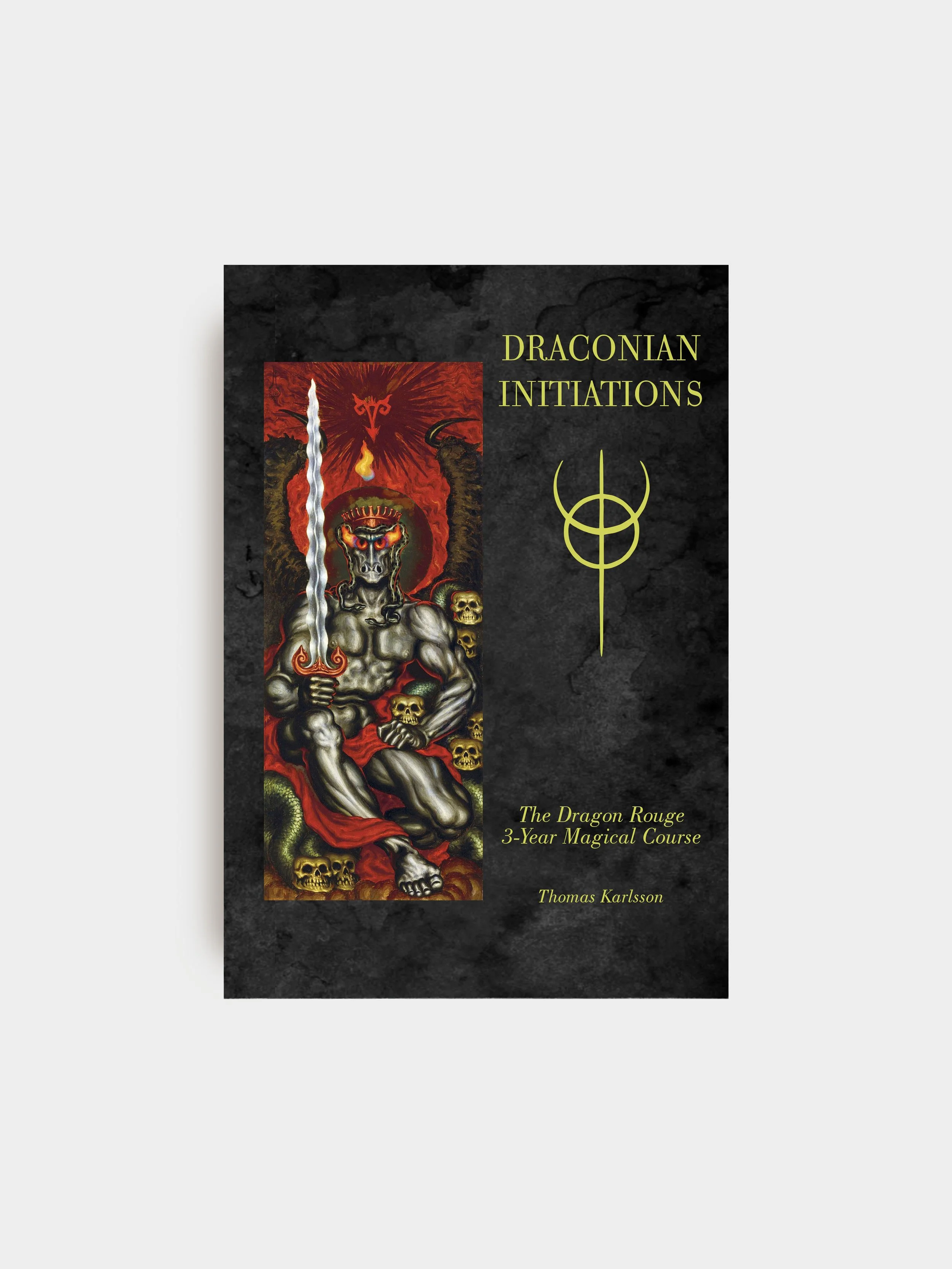
Hardcover. By Thomas Karlsson. Manus Sinistra.
This book contains the first three years of the internal initiatory system of Dragon Rouge, one of the most influential esoteric orders of the Left-Hand Path in the last quarter century.
Each of these levels corresponds to a stage of training that spans approximately one year of structured magical practice. Lilith, Gamaliel, and Samael are linked to specific regions of the Tree of Death (Qliphoth) and propose distinct approaches of work: physical, astral, and existential.
• Lilith focuses on the earthly, the will, and access to the dream world.
• Gamaliel delves into the astral plane, sexual magic, dark archetypes, and lunar cycles.
• Samael introduces processes of rupture, confrontation, and inner alchemy.
Each course consists of six doctrinal letters with both monthly and weekly exercises. The material includes practices such as meditation, rituals, the awakening of the energy body, dreamwork, invocations, concentration techniques, and more.
This work is intended for those who seek a serious path within the Left-Hand Path tradition, under the tutelage of the Dragon.
LATEST BOOK ARRIVALS

Alchemy Rising: The White Book by Heliophilus. (Aula Lucis)
The second and latest instalment to the Alchemy Rising series by the contemporary English alchemist Heliophilus is dedicated to the Art of Water and the mystery of the alchemical menstruums. Within its lavishly illustrated pages, Heliophilus takes us on an alchemical quest that follows the Sacred Fountain of the alchemists, through the great monarchical tributaries of Nature nurtured and nourished by the very streams and rivers that flow through the mineral, vegetable and animal kingdoms. From these kingdoms the alchemists drew their liquors, menstruums, spirits and lixiviums, and by doing so were able to calcine, precipitate, dissolve and sublime their subjects; reduce them to their first matter; and separate their philosophical principles.
In The White Book, we are invited to join Heliophilus on his alchemical quest which begins with the consideration of various mother-waters of the alchemists. Guided by the light of his experience, we will gather them from the heavens and the oceans in which they fall. Our investigation into these essential waters will follow their courses from the rivers of the vine into the living tributaries of the animal, vegetable and mineral kingdoms, until finally we will search for the secret spring deep within the mountains. We will prepare our menstruums from the great monarchies of Nature, and from these very kingdoms we will distill their spirits, resolve their lixivia, decoct their oils and lay the foundation for that most potent of all alchemical dissolvents: the mysterious Alkahest of Paracelsus and the Philosophical Mercury of the Sages.
“Burn it in Water and wash it with Fire,” the old Adepts were wont to say; but this must be done homogeneously, for fear of destroying or contaminating the very principles we wish to extract. Following in the footsteps of Heliophilus, using our menstruums we will ‘calcinate’ our subjects, and in so doing open them up—be they gemstones, minerals or metals, for by means of these fiery waters we can extract their essentials and thereby alchemically rejoin what we have divided. We will grip the Hand of the Philosophers and prepare each finger according to the tenets of the Art, and in these our mineral gardens we will prepare the seasoning to cook our mercurial fish.
The White Book is divided into two parts: Theorica and Practica. The first is an introduction into the alchemical mystery of the Goddess and the concepts of transmutation, with a gathering of the Philosophers whose arcane ideas and mytho-hermetic symbolism are carefully laid out and considered before Heliophilus proceeds on to the practice. Practica is divided firstly into an archetypal discussion on ‘Moonshine’ and the exhalation of the stars, following which the work is separated further into the Vegetable, Animal and Mineral chapters. Under the Vegetable work Heliophilus discusses Acetum and the means of preparing one of the most versatile vegetable menstruums of the alchemists. This is followed by Tartar and the discussion of the importance and preparation of its spirit, its salts and the lesser Circulatum of Urbigerus.
The Animal work includes a detailed inquiry into Urine and the means of extracting a spirit from Oyster shells, whilst the Mineral work itself is separated into five fingers, which constitute the aforementioned Hand of the Philosophers according to which Heliophilus demonstrates the preparation of each of the alchemical salts, namely Nitre, Sal Ammoniac, Salt, Vitriol and Alum, in keeping with the dictates of the Art. The final investigation in The White Book is titled ‘Mercurius Trismigestus’: the Thrice Great Mercury, a work of three parts which shall be concluded in the future in the final instalment of the Alchemy Rising series, The Red Book, and which Heliophilus initiates with a theoretical and practical inquiry into the Prima Materia of the Philosophers, the spirit wine of Lully and the elusive Sericon of the Sages.
Alchemy Rising: The White Book is an essential manual for all aspiring alchemists, providing some of the indispensable keys necessary to unlock the riddles of the Philosophers, and sounding the deep waters of the Royal Art with clarity, sincerity and true passion.
Limited to 1000 hand-numbered copies.
Trim size 246 × 189 mm.
304 pages.
Handbound in full white bonded leather.
Stamped with blue holographic foil on front cover and spine, with alchemical symbols of water and fire blind debossed on both sides.
Lavishly illustrated throughout with full colour photographs.
Text set in Neacademia.
Printed in full colour on Matt Art FSC-certified 150 gsm paper.
Featuring textured colour endpapers, head & tail band and silk ribbon.
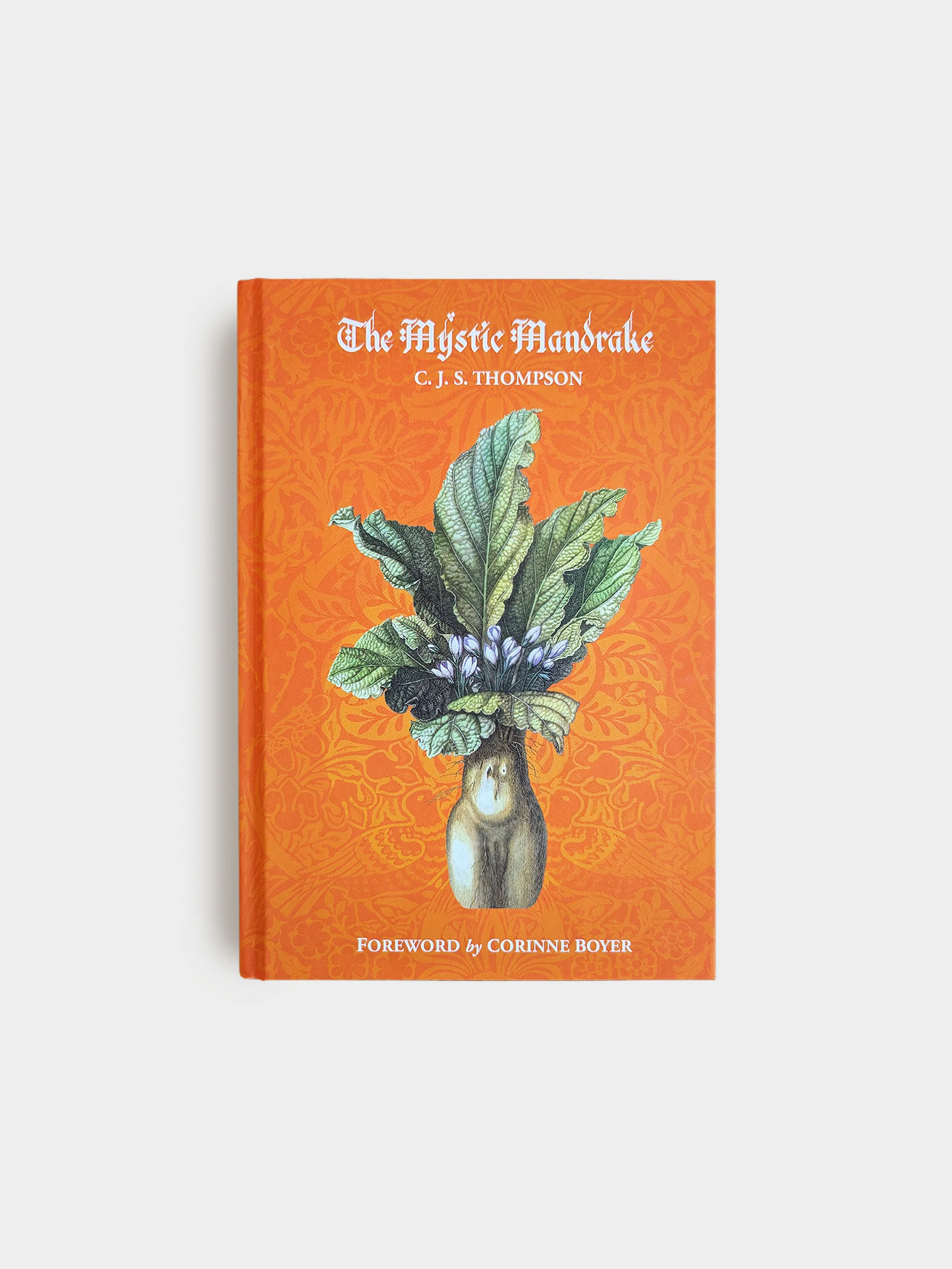
Hardcover. By C.J.S. Thompson
Foreword by Corinne Boyer
Few plants in the history of botany have inspired as much fascination, fear, and supernatural speculation as the mandrake. In The Mystic Mandrake, C. J. S. Thompson guides the reader through one of the most comprehensive interdisciplinary explorations of this enigmatic plant, at the crossroads of plant lore, medicine, folklore, and occult traditions.
From the earliest civilizations of the Near East to the botanical knowledge of ancient Greece and the folklore of medieval Europe, the mandrake remains one of the most emblematic and enduring witch plants. Revered as a love charm, root fetish, magical talisman, and the Devil’s ally, its human-shaped root and potent psychoactive properties gave rise to some of the most enduring legends in the history of natural magic. The belief that the plant screamed when uprooted, that it could confer fertility or wealth, or that it harboured a spirit within its roots reveals a deep relationship between nature, animistic belief and mythopoetic expressions of the natural world.
Drawing on ancient texts, medieval herbals, spiritual traditions, and early scientific observations, C. J. S. Thompson reconstructs more than three millennia of mandrake lore. At once scholarly and evocative, The Mystic Mandrake is an essential work for anyone interested in the practice of magic, the symbolic language of plants, and the enduring human quest to uncover the secret powers of nature.
The book is introduced with a foreword by Corinne Boyer, folk herbalist, teacher, and author of several books on plant lore and history.
196 pages - featuring 18 illustrations in colour.
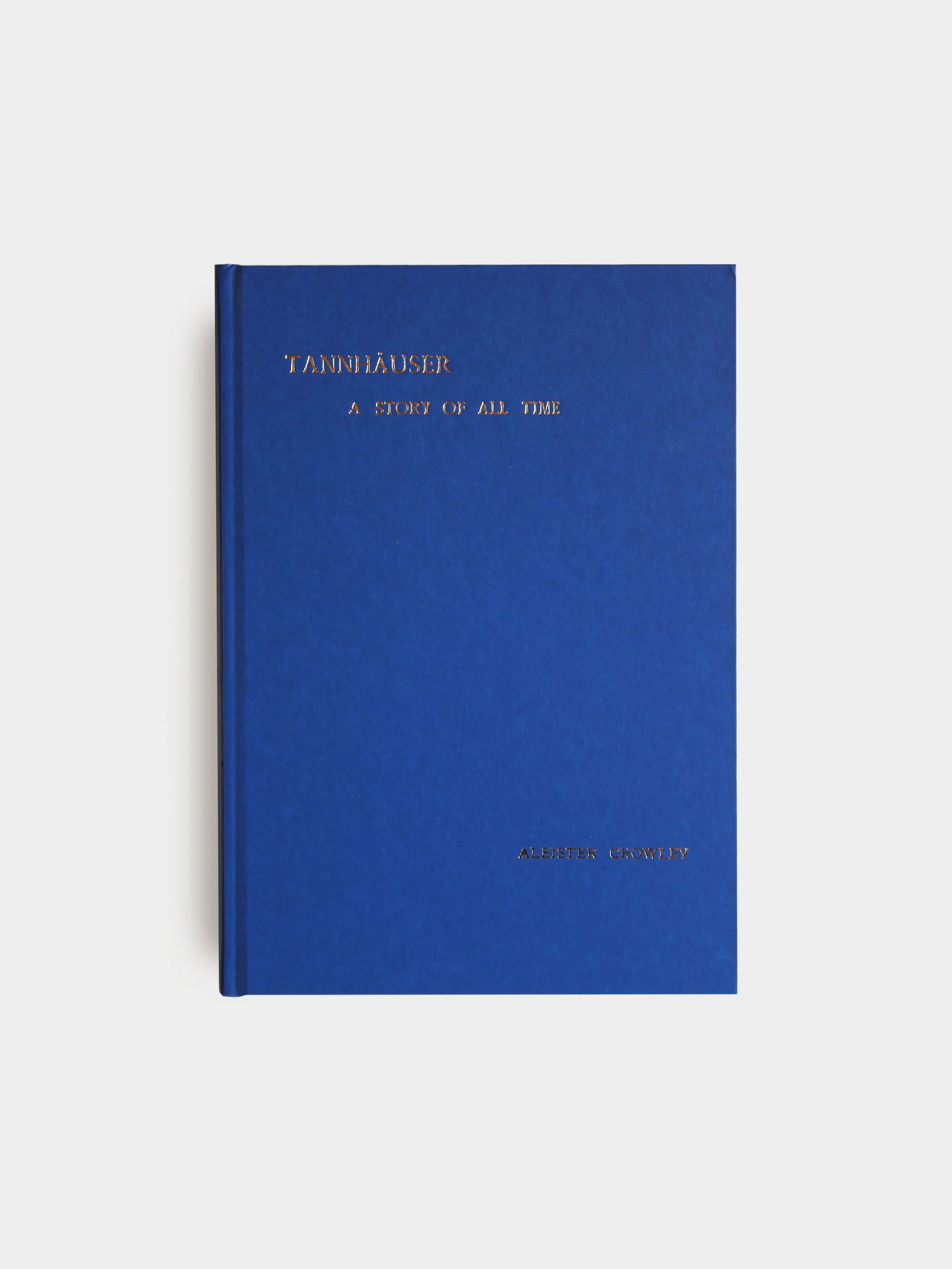
Abraxas Publishing is proud to announce the release of its first full English language publication, the facsimile edition of Aleister Crowley’s “Tannhäuser – A Story of All Time”.
Crowley finished "Tannhäuser" in Kandy, Ceylon in the beginning of 1900s during a period when he and his mentor Allan Bennet were in middle of intense yogic practices. The book is Crowley’s take on the 13th century legend of Minnesinger Tannhäuser. In Crowley’s dramatic version, which he referred as “The History of the Soul”, the traveling Rosicrucian poet journeys in the world of gods, men and demons in search of truth and harmony. Through Tannhäuser's reflections the book explores complex themes, such as the clash between earthly passions and spiritual aspirations, foreshadowing the conflicts and transformations Tannhäuser experiences throughout the story. The drama reflects Crowley's fascination with mysticism and the interplay of earthly desire and divine inspiration. Tho overlooked at its time, Crowley’s Tannhäuser play grew later into a seminal text in Thelema and in O.T.O.
Crowley’s gives the keys for deciphering the text in his preface written in Kandy in 1901 where he connects the drama’s scheme with John Bunyan’s “The Pilgrim's Progress” (1678). Crowley advices the reader to observe Tannhäuser as the only “real” character of the play and other characters just merely reflections of the traveling poet’s own consciousness.
The publications is a facsimile reprint of the second edition published through Crowley’s own publishing house Society for the Propagation of Religious Truth aka S.P.R.T. in 1907. In the “new” edition Crowley used mainly unbound pages left over from the original 1902 Kegan Paul, Trench, Trübner & Co.’s publication. Crowley’s disappointment with Kegan Paul's management of his book sales spurred him to distribute his own works via S.P.R.T.
The facsimile edition is published in large format hardback edition of 222 hand-numbered copies. Front and back cover and spine stamped with gilt. Binding: sewn. Endpapers: Malmero Abysse. Headband: Iranian turquoise. The book comes with a limited edition “Crowley in Ceylon” -bookmark.
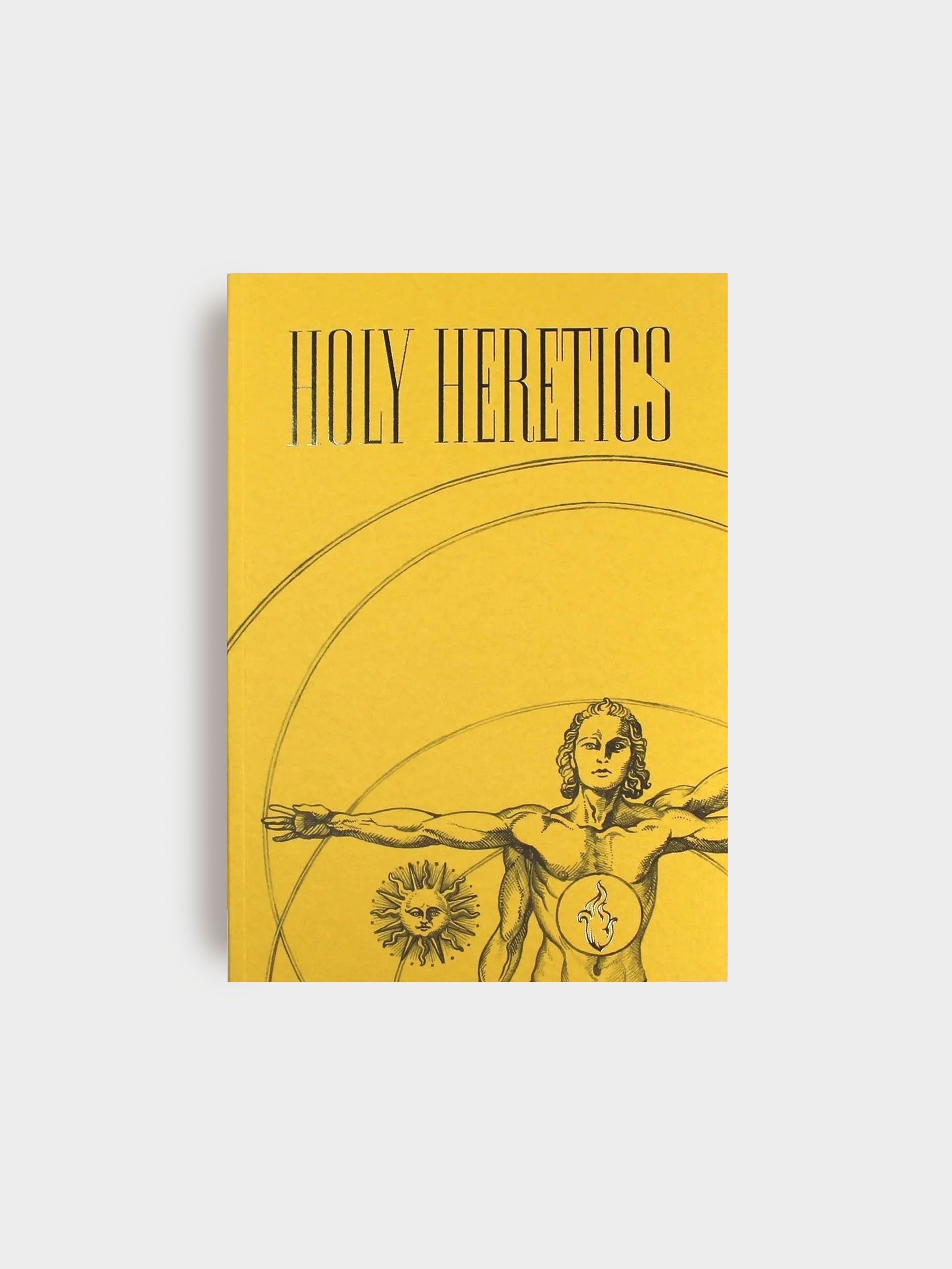
Paperback Edition. Sewn paperback printed on 120gsm paper, with yellow card covers printed in black with gold foil.
Illustrations by Jose Gabriel Alegría Sabogal
Holy Heretics is the third and final volume in the Holy Daimon cycle. Blending occult philosophy, magic and mysticism, Frater Acher guides the reader through the centuries with a series of practical exercises and rites which ultimately restore the powerful Olympic spirits to their original magical context.
Frater Acher identifies certain techniques of mysticism as a prerequisite for the work of magic, as the often missing element in the development of a serious practice. The advanced magical rites Holy Heretics contains are built from the foundations of simple practical exercises. These are provided and carefully explained. When performed, these rites form a luminous chain for the student who wishes to attain to adepthood and the mastery of empty-handed magic.
Holy Heretics offers a challenge to magicians who have reactively rejected Christianity, and a challenge to Christians who are unaware of the heretical tensions that run throughout Christian mysticism. As Acher writes, ‘I am very aware that searching for such a path among the very people who for centuries tried to usurp and control or deform and kill the Western magical tradition is a big ask. On such an expedition to find the narrow path we’ll soon be crawling through the bones, blood and ashes of our ancestors. And yet, at the same time we’ll also encounter beauty and genuine practice, true grace and deep spiritual power.’ The mystic and magician is always a threat to spiritual orthodoxy, and Acher navigates us through that difficult space. As a guide, he approaches the Christian material fairly, is generous when appropriate, and unapologetic when describing its worst excesses. The work draws extensively from manuscript sources and texts that are not available in English, illuminating a hitherto neglected world. All is done with the aim of extracting the spiritual gold of our own heart prayer, rather than imbibing the poison of orthodoxy.
In Book I of Holy Heretics we are taken on a mystical tour de force, beginning with the Desert Fathers and the austerities forged in the wilderness. From Pseudo-Dionysius the Areopagite we discover mystical prayer as a method to bypass the cognitive mind, and then enter into the inner stillness of Hesychasm. We stand with Symeon the New Theologian at the edge of the Abyss, and witness the remarkable visions of Hildegard of Bingen. We watch the potential of the mustard seed unfold, and encounter the radical this-worldliness of the Theologia Germanica, a manifesto for the gnostic practitioner that threatens the supremacy of the Catholic Church itself by directing the individual to seek their own illumination.
In Book II, Frater Acher turns his attention to magic, as an art of symphonic harmonious co-creation. The nature of the magical call is described, and the use of the magical bell introduced with historical examples. Next Acher considers Paracelsus, giving a full English translation of his little known Arcanum arcanorum, a celestial rite to summon both one’s holy daimon and the seven Olympic spirits with such a bell. The riteis expertly deciphered, from its use of alchemical tincture to its astrological timing, by following clues across the Paracelsian and Pseudo-Paracelsian corpus. The work culminates with Frater Acher’s restored version of the Ritual of the Olympic Spirit, opening the gates of the seven spirits and uniting them into one greater Olympic Spirit. The final act thus draws on all the lessons that Holy Heretics has laid out and the flame burning in our hearts.
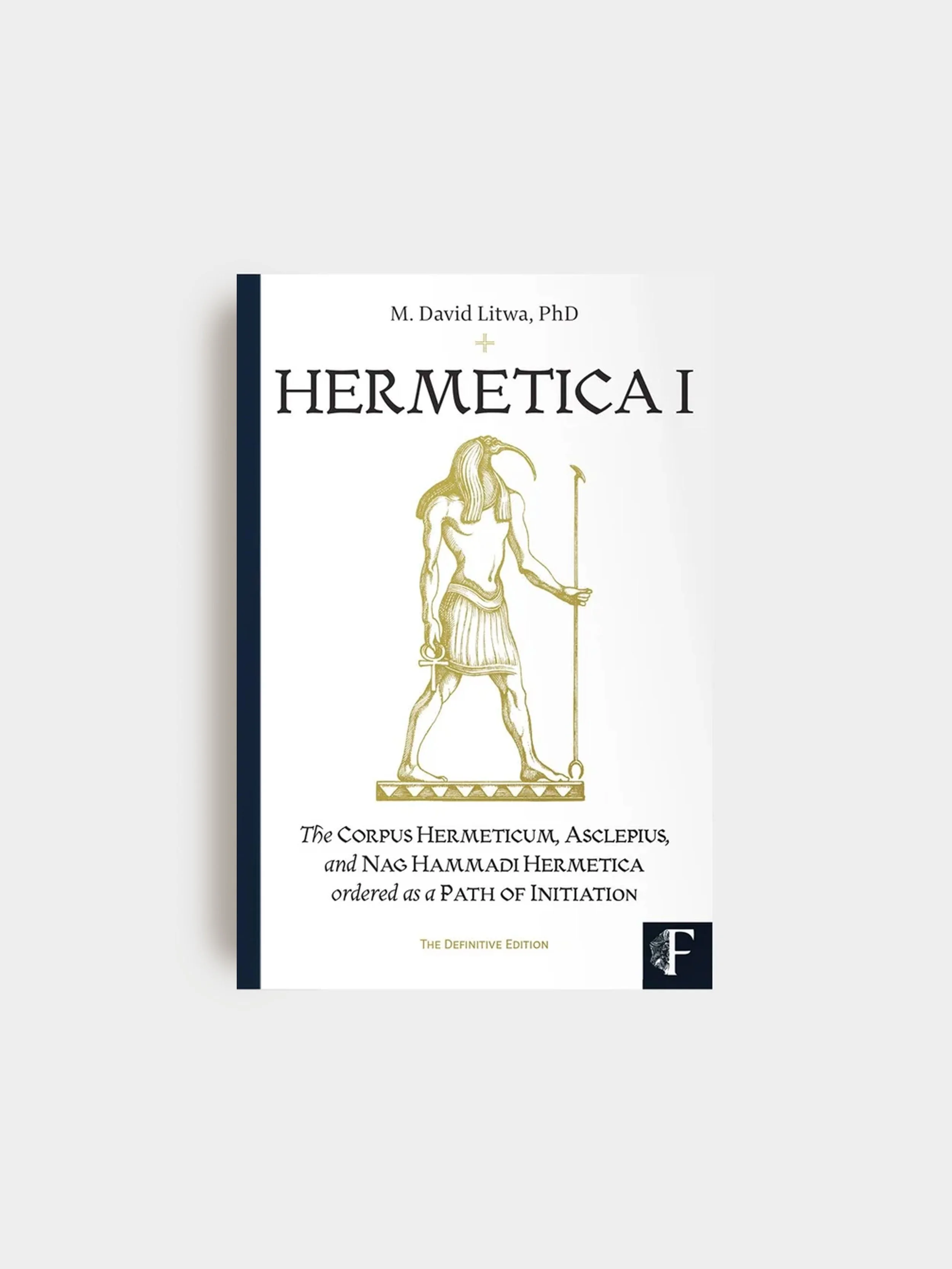
Paperback. The Definitive Edition with a revised Introduction, added Appendices, and Index.
Hermetica I: The Corpus Hermeticum, Asclepius, and Nag Hammadi Hermetica Ordered as a Path of Initiation
By M. David Litwa, PhD.
Illustrations by José Gabriel Alegría Sabogal, MA.
Publisher: Fount Ultd., 2026
+ + +
Hermetica I: The Corpus Hermeticum, Asclepius, and Nag Hammadi Hermetica Ordered as a Path of Initiation
The Definitive Edition with a revised Introduction, added Appendices, and Index.
By M. David Litwa, PhD.
Illustrations by José Gabriel Alegría Sabogal, MA.
Fount Ultd., 2026
The Hermetic corpus is a spiritual and intellectual treasure stemming from ancient Egyptian sages who could write and think in Greek. Since the Renaissance, this corpus has appeared in an order that doesn’t fit the path of spiritual initiation suggested by the corpus itself. This edition reorders the corpus—including the Latin Asclepius and the Nag Hammadi Hermetica—into four progressing parts: introductory tractates, general discourses, detailed discourses, and revelatory discourses. A focused commentary follows each tractate. The book is written for all lovers of the Hermetica, but in particular for those who are willing, in some sense, to join the way of immortality.
+ + +
This volume presents the Hermetic writings as a central and enduring current within Western spirituality, born from the encounter between Egyptian religious wisdom and Greek philosophical thought in late antiquity. Composed at a time when traditional cults and forms of knowledge were under threat, the Hermetica preserve a vision of spiritual rebirth, divine knowledge, and inner transformation that continued to shape later philosophical and Christian traditions, often without acknowledgment. These texts are not peripheral speculations but articulate a serious and integrated spiritual worldview aimed at awakening higher consciousness and participation in divine life.
Rather than treating the Hermetica as a loosely assembled anthology or merely as historical documents, this book approaches them as a corpus structured by initiation and spiritual formation. Guided by indications within the texts themselves, the tractates are arranged to reflect a movement from exhortation and preparation, through doctrinal grounding, toward revelatory experience. Reading, in this context, becomes a disciplined engagement—one that ancient readers understood as capable of effecting genuine inner change rather than serving purely intellectual ends.
The Hermetic path presented here resists easy categorization. It does not collapse into abstract philosophy, nor does it reduce spiritual experience to dogma or belief. Instead, it unfolds in stages, holding together cosmology, ethics, and contemplative practice, and culminating in rebirth and direct vision of the divine realms. Apparent tensions within the corpus—between world-affirmation and renunciation, or between unity and distinction—are shown to reflect different moments within a coherent process of spiritual transformation.
Although grounded in years of careful scholarship and translation, this book is not written for specialists alone. It speaks to readers who wish to understand the historical depth of the Hermetic tradition while remaining attentive to its spiritual demands. For practitioners and academics alike, it offers an invitation to encounter the Hermetica not only as texts to be analyzed, but as writings intended to shape perception, practice, and inner life.
+ + +
ABOUT THE AUTHOR: M. David Litwa, PhD.
Dr. Litwa's career began with a monograph on deification (becoming god) as seen through the lens of the Pauline writings (We Are Being Transformed, 2012). In 2013, he offered a general introduction to deification in Western culture from the Pharaohs to modern Transhumanists. Then in 2016, he focused on the politics and literature of self-deification (Desiring Divinity). He has twice engaged gospel literature as a witness to Jesus’s literary deification (Iesus Deus, 2014) and to a particular historiographical genre (How the Gospels Became History, 2019). A fascination with alternative Christian movements inspired him to edit and translate the anonymous Refutation of All Heresies (2016). After that came the annotated translation of important Hermetic testimonial and fragments (Hermetica II, 2018). Litwa has finished a project on angelification traditions in Hellenic and Christian literature (Posthuman Transformation, forthcoming 2021). He has published history of alternative Christian movements in the second-century CE (Found Christianities). A full book on one of these movements, the Carpocratians, came out in 2022. It contains the first ever fully commentary on "Secret Mark." Dr. Litwa's most popular book, The Evil Creator (2021), tells the secret history of how Christians like Marcion came to view the creator as evil. Late Revelations is a short, accessible argument for a late date of the final form of the Gospels and Acts. Hermetica I is a new translation of the Corpus Hermeticum based on a better edition of the Greek text.
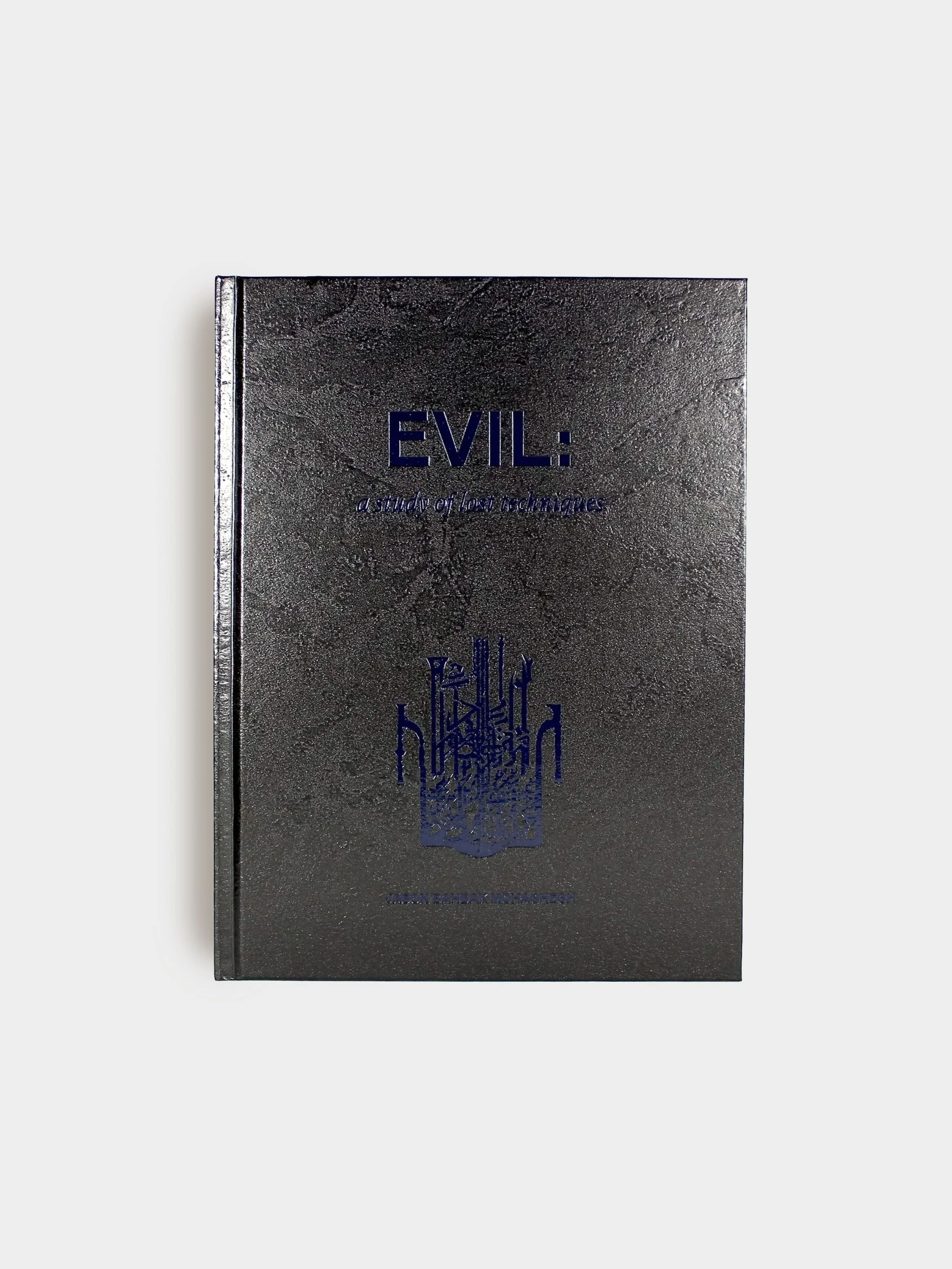
Evil: A study of lost techniques by Jason Bahbak Mohaghegh is a mapping of evil in its minor prisms of fascination through an infinitely complex set of micro-techniques. A singular work of sustained intensity.
Standard hardback edition, Limited to 500 copies
Bound in black ‘metal paper’ with abyssal blue foiling on the front and spine, with deep blue endpapers. Printed in black and dark blue ink on 150 gsm paper.4vo (280 × 210 mm). 104 pp. Illustration and diagram of evil by Ayis Lertas
———
Evil: A study of lost techniques by philosopher Jason Bahbak Mohaghegh is a theoretical investigation into the aesthetics and intensities of cruelty, mapping evil in its minor prisms of fascination. Mohaghegh explores evil as an infinitesimal complex of techniques – subtle inflections of possibility and obscure typologies of influence that bring together the rarest philosophies of oblivion, decadence, cruelty, derangement, ecstasy, atrocity, rage, and mystery alongside the most intricate poetic genres of the rant, the elegy, the riddle, the whisper, the threat, the question, silence, and the nocturne.
Through a labyrinthine series of notes, diagrams, and outer limit speculations, this book attempts to uncover those concealed fragments which together form the architecture of another world altogether. A singular work of sustained intensity.